EverGrain Built
Learn about green and passive building
Green and passive building can feel confusing at first. This page gives you plain-language guides to the ideas, terms, and choices that matter, so you can compare options and hire the right licensed builder for your home.
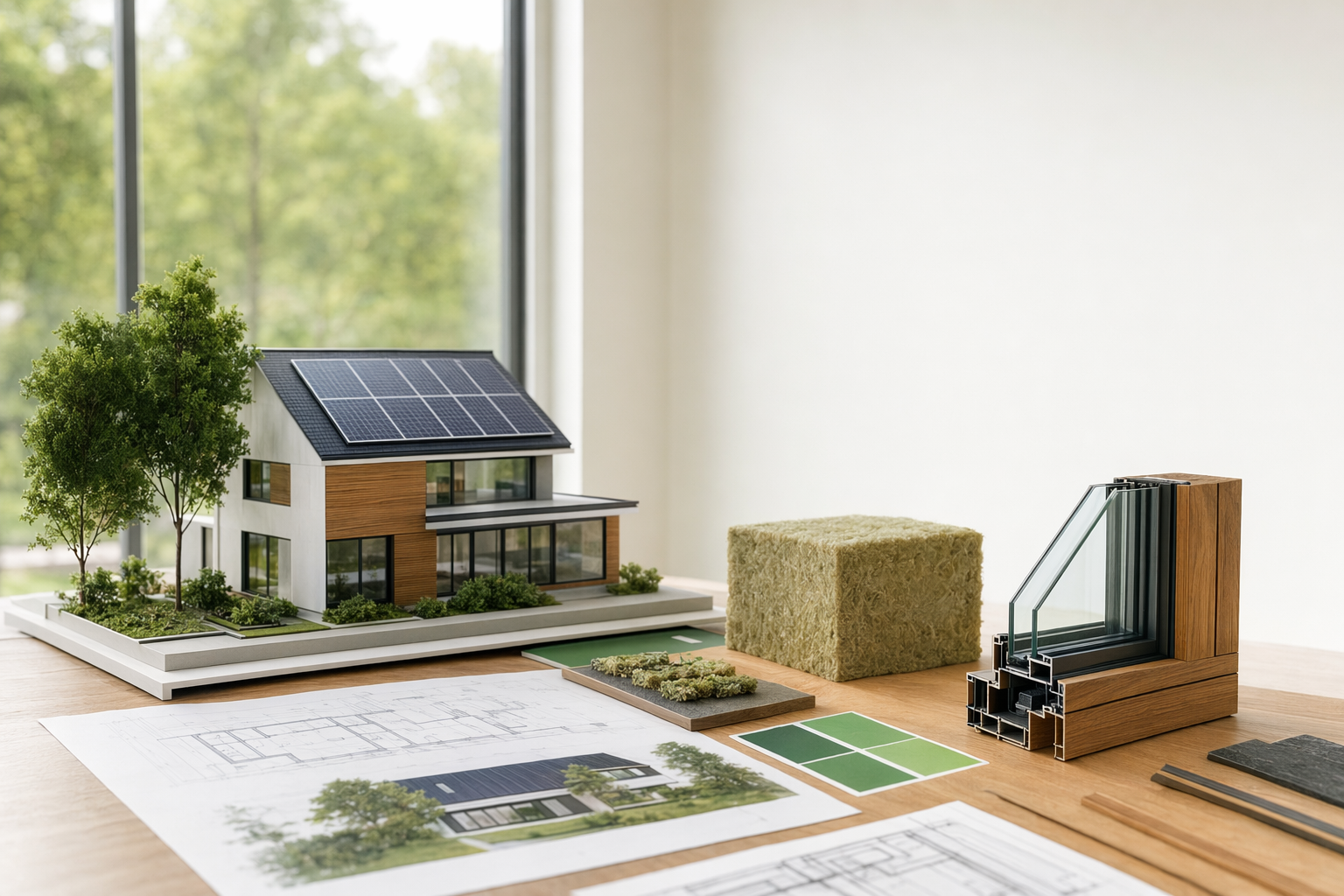
A plain-language guide to the five fundamentals of a passive house — super-insulation, airtightness, high-performance windows, heat-recovery ventilation, and right-sized systems.
Open → Green building certifications explainedWhat the major green-home certifications actually mean for a homeowner — the performance ideas behind them, what gets tested, and how certification affects a build.
Open → Understanding home energy ratingsHow home energy ratings and indexes work, what a lower score means for your bills and comfort, and how an energy model guides design before you build.
Open → How to choose a green builderThe questions, certifications, and past-project evidence to look for when hiring a green or passive-house builder — and the red flags that should give you pause.
Open → Green-building terms, in plain EnglishA friendly glossary of green and passive-house building terms — ACH, U-factor, thermal bridge, HRV, embodied carbon, and more — without the jargon.
Open → Paying for an energy-efficient homeHow the up-front cost of a greener home compares with the savings over time, plus the kinds of incentives and financing that can lower the premium.
Open → What is a passive house?A plain-language guide: What is a passive house. What it means for your home, your comfort, and your bills, and how to talk to a green builder about it.
Open → Passive house vs. net-zero: what's the difference?A plain-language guide: Passive house vs. net-zero: what's the difference. What it means for your home, your comfort, and your bills, and how to talk to a green builder about it.
Open → What does airtight construction mean?A plain-language guide: What does airtight construction mean. What it means for your home, your comfort, and your bills, and how to talk to a green builder about it.
Open → What is a blower-door test?A plain-language guide: What is a blower-door test. What it means for your home, your comfort, and your bills, and how to talk to a green builder about it.
Open → What is a thermal bridge, and why it mattersA plain-language guide: What is a thermal bridge, and why it matters. What it means for your home, your comfort, and your bills, and how to talk to a green builder about it.
Open → What is an HRV or ERV, and do I need one?A plain-language guide: What is an HRV or ERV, and do I need one. What it means for your home, your comfort, and your bills, and how to talk to a green builder about it.
Open → How much insulation does a green home need?A plain-language guide: How much insulation does a green home need. What it means for your home, your comfort, and your bills, and how to talk to a green builder about it.
Open → What U-factor and SHGC mean on windowsA plain-language guide: What U-factor and SHGC mean on windows. What it means for your home, your comfort, and your bills, and how to talk to a green builder about it.
Open → Are triple-pane windows worth it?A plain-language guide: Are triple-pane windows worth it. What it means for your home, your comfort, and your bills, and how to talk to a green builder about it.
Open → What is embodied carbon in a home?A plain-language guide: What is embodied carbon in a home. What it means for your home, your comfort, and your bills, and how to talk to a green builder about it.
Open → How to make a new build solar-readyA plain-language guide: How to make a new build solar-ready. What it means for your home, your comfort, and your bills, and how to talk to a green builder about it.
Open → What is an all-electric home?A plain-language guide: What is an all-electric home. What it means for your home, your comfort, and your bills, and how to talk to a green builder about it.
Open → Does a green home cost more to build?A plain-language guide: Does a green home cost more to build. What it means for your home, your comfort, and your bills, and how to talk to a green builder about it.
Open → How long until a green home pays off?A plain-language guide: How long until a green home pays off. What it means for your home, your comfort, and your bills, and how to talk to a green builder about it.
Open → How to read a green builder's estimateA plain-language guide: How to read a green builder's estimate. What it means for your home, your comfort, and your bills, and how to talk to a green builder about it.
Open → Questions to ask a green builder before you hireA plain-language guide: Questions to ask a green builder before you hire. What it means for your home, your comfort, and your bills, and how to talk to a green builder about it.
Open → Green building in hot, humid climatesA plain-language guide: Green building in hot, humid climates. What it means for your home, your comfort, and your bills, and how to talk to a green builder about it.
Open → Green building in cold climatesA plain-language guide: Green building in cold climates. What it means for your home, your comfort, and your bills, and how to talk to a green builder about it.
Open → Can you make an existing home passive?A plain-language guide: Can you make an existing home passive. What it means for your home, your comfort, and your bills, and how to talk to a green builder about it.
Open → What is a deep energy retrofit?A plain-language guide: What is a deep energy retrofit. What it means for your home, your comfort, and your bills, and how to talk to a green builder about it.
Open → How an airtight home stays healthy and freshA plain-language guide: How an airtight home stays healthy and fresh. What it means for your home, your comfort, and your bills, and how to talk to a green builder about it.
Open → Avoiding mold and moisture in a tight homeA plain-language guide: Avoiding mold and moisture in a tight home. What it means for your home, your comfort, and your bills, and how to talk to a green builder about it.
Open → How ventilation improves indoor air qualityA plain-language guide: How ventilation improves indoor air quality. What it means for your home, your comfort, and your bills, and how to talk to a green builder about it.
Open → How a heat pump is sized for an efficient homeA plain-language guide: How a heat pump is sized for an efficient home. What it means for your home, your comfort, and your bills, and how to talk to a green builder about it.
Open → What does net-zero-ready mean?A plain-language guide: What does net-zero-ready mean. What it means for your home, your comfort, and your bills, and how to talk to a green builder about it.
Open → Green building and home resale valueA plain-language guide: Green building and home resale value. What it means for your home, your comfort, and your bills, and how to talk to a green builder about it.
Open → A first-timer's custom green-home checklistA plain-language guide: A first-timer's custom green-home checklist. What it means for your home, your comfort, and your bills, and how to talk to a green builder about it.
Open → Green building for families new to the USA plain-language guide: Green building for families new to the US. What it means for your home, your comfort, and your bills, and how to talk to a green builder about it.
Open → Understanding energy incentives and rebatesA plain-language guide: Understanding energy incentives and rebates. What it means for your home, your comfort, and your bills, and how to talk to a green builder about it.
Open → What the timeline of a passive build looks likeA plain-language guide: What the timeline of a passive build looks like. What it means for your home, your comfort, and your bills, and how to talk to a green builder about it.
Open →What you can learn here
A green or passive home is not one single product. It is a group of design and building choices that can help reduce energy use, improve comfort, and lower waste. Results vary by climate, site, design, and builder.
Our guides explain common topics in simple words, including insulation R-value, airtightness and ACH, blower-door testing, window U-factor and SHGC, heat pumps, and HRV/ERV ventilation. We also explain terms like all-electric, solar-ready, and net-zero.
You can start with these pages:
- Costs for what can affect price
- Systems for heating, cooling, hot water, and ventilation
- How it works for the matching process
- Get matched if you want help finding green builders near you
How to use this information
Use these guides to ask better questions and compare builders clearly. EverGrain Built is a free matching and guide service. We are not the builder, architect, or contractor. You compare your options and choose who to hire.
As you read, focus on a few basics:
1. Ask what performance goals are realistic for your climate and budget.
2. Ask how the builder handles insulation, air sealing, windows, and ventilation as one system.
3. Ask what testing is included, such as a blower-door test.
4. Ask for scope, allowances, timeline, and price details in writing.
If you want help getting started, get matched with experienced green custom-home builders near you. Then confirm licenses, scope, schedule, and final pricing directly with the builder before you sign anything.
You do not need to know every building term to make a smart choice. Learn the basics, compare builders carefully, and get everything important in writing.
Thinking about an energy-efficient or passive home?
Start with the basics of how a high-performance home works. Then get matched, free, with green builders who serve your area. You compare and choose who to hire — and confirm the price in writing before any work starts.