Learn
What is a blower-door test?
A blower-door test checks how much air leaks in and out of a house. It helps you and your builder see where the home is losing conditioned air, so you can make better choices about air sealing, ventilation, and comfort.
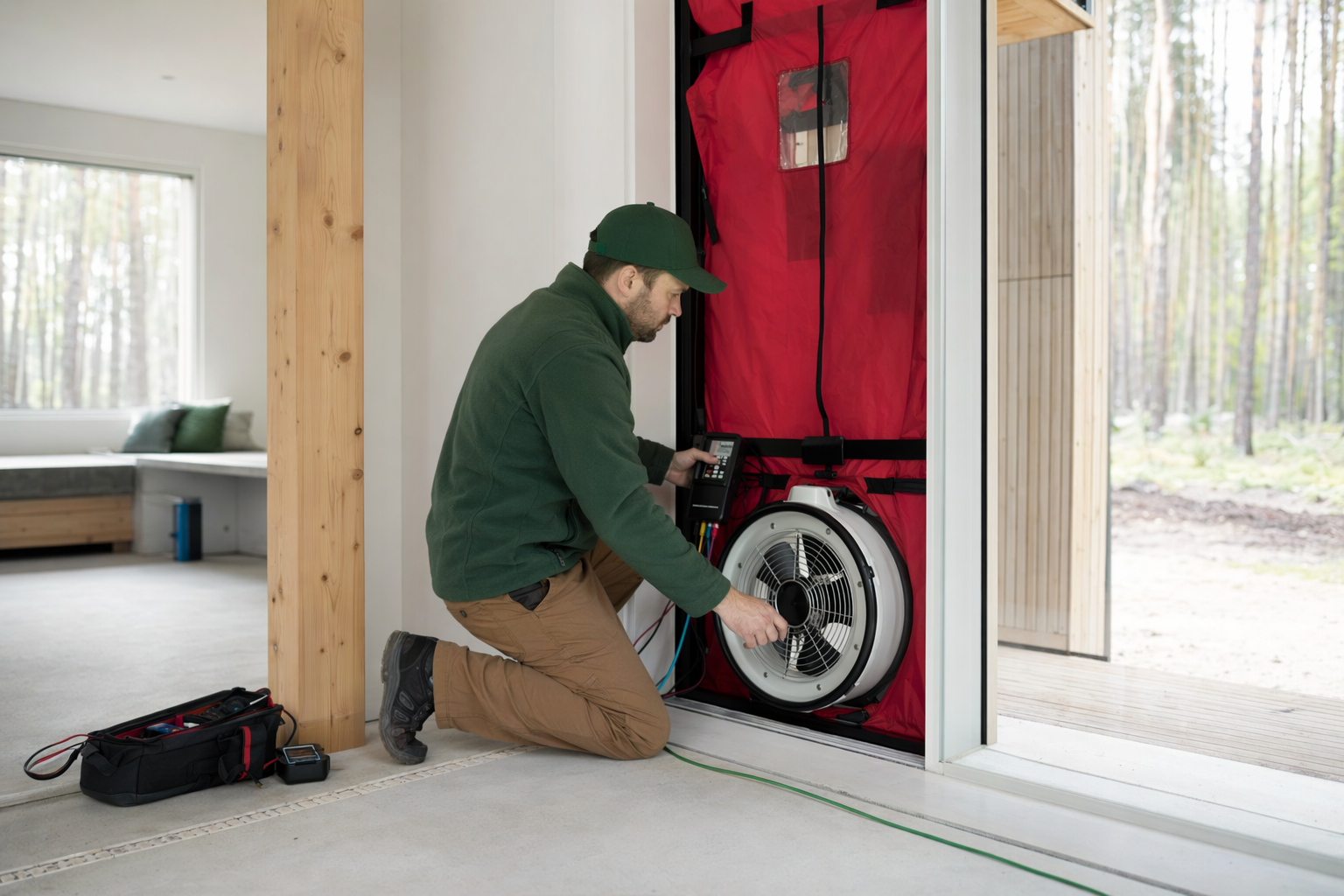
What the test is
A blower-door test uses a large fan that fits into an exterior door opening. The fan pulls air out of the house or pushes air in, which changes the pressure and makes leaks easier to find.
While the fan runs, the tester measures how much air is moving through the fan to hold that pressure. That number helps show how leaky or airtight the home is.
Builders and energy raters often use this test in new homes, green homes, and passive-house-style projects. It can also be used in existing homes before or after upgrades.
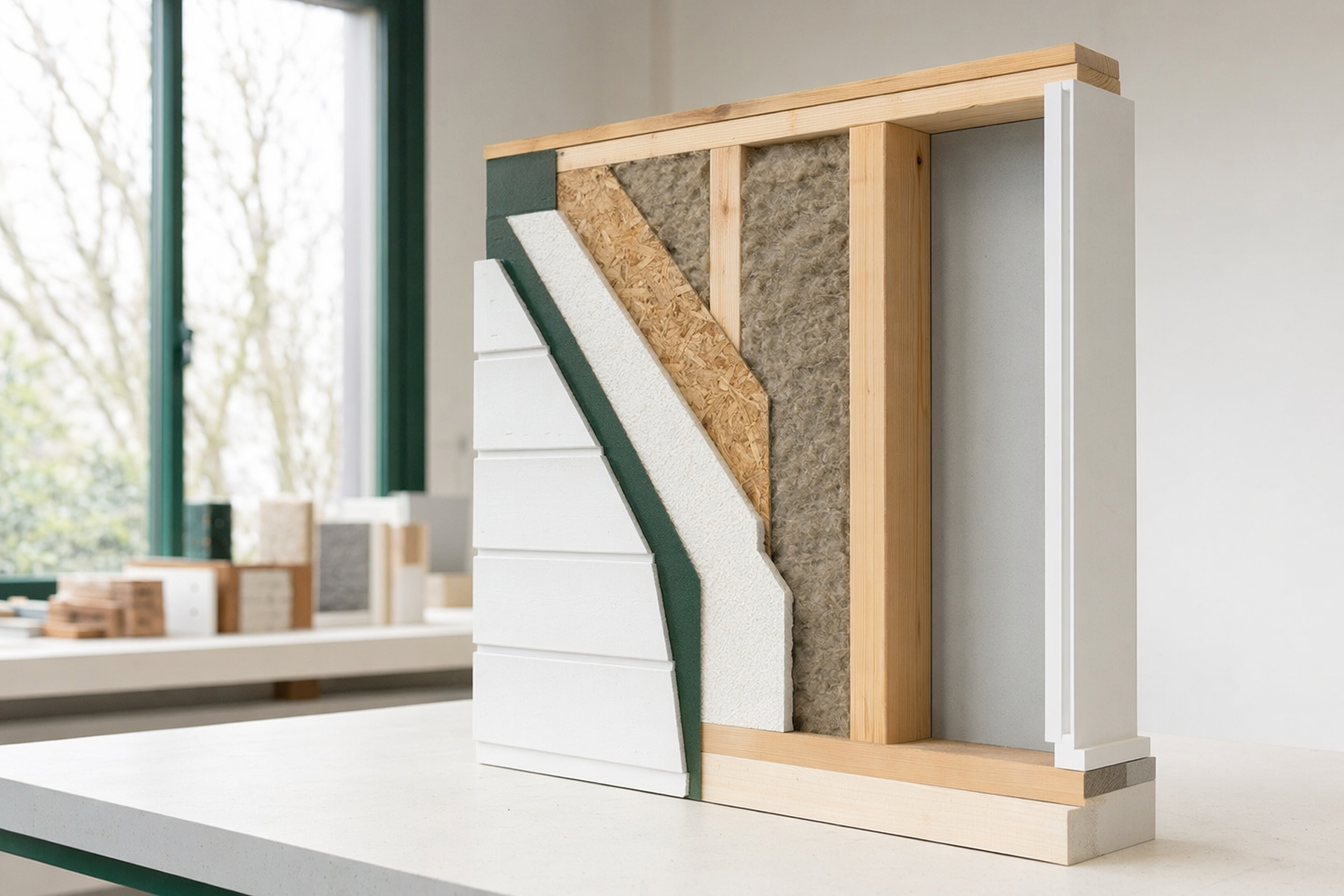
Why it matters
Air leaks can affect comfort, indoor air quality, and energy use. If outside air slips through many small gaps, rooms may feel drafty, dusty, or uneven in temperature.
A tighter home can help your heating and cooling system work in a more controlled way. But tighter is not the whole story. A well-built home also needs planned fresh-air ventilation, often with an HRV or ERV, so the home gets clean air in a reliable way.
This is why green builders look at the whole system. They consider insulation, windows, air sealing, HVAC, and ventilation together. You can learn more on our systems page.
What the numbers mean
You may hear terms like ACH50 during a blower-door test. ACH means air changes per hour. The 50 means the house was tested at a set pressure difference of 50 pascals.
In simple terms, a lower ACH50 number means a tighter house. A higher number means more air leakage. The right target depends on your goals, climate, design, and local code.
Ask your builder these basic questions:
- What blower-door target are you building toward?
- Is that target based on code, a green program, or your own standard?
- When will the home be tested?
- If the result misses the target, who fixes the leaks and how?
- Will ventilation be designed for the final airtightness level?
Do not assume one number tells you everything about home quality. A good result should be matched with good moisture control, insulation details, window performance, and proper ventilation.
When the test happens
Many builders test more than once. An early test, before drywall, can help find and fix leaks while they are still easy to reach. A final test near the end of the job confirms the finished result.
A typical process looks like this:
- The tester closes exterior doors and windows and sets the home up for the test.
- The fan runs and the tester measures air leakage.
- The team uses smoke, an infrared camera, or simple hand checks to find leaks.
- The builder seals problem spots and may test again.
If you are planning a high-performance home, ask about testing early in the design and schedule. If you want help finding builders who understand this process, use our free get matched service.
How to talk to a builder about it
You do not need to be an expert. Just ask clear questions and get the answers in writing. That helps you compare builders fairly.
Try asking:
- Do you include blower-door testing in your standard scope?
- Who performs the test?
- What airtightness target do you aim for?
- What air-sealing details do you use around framing, windows, ducts, and penetrations?
- What ventilation system do you pair with a tighter home, such as an HRV or ERV?
EverGrain Built is a free matching service. We are not a builder or contractor. We help you learn the basics, compare experienced green builders near you, and choose who to hire. Always confirm scope, testing, price, and responsibility for fixes in writing with a licensed builder. You can also read more articles in our learn section and see how it works.

A blower-door test shows how much air leaks through your home. It helps you ask better questions, compare builders, and plan for both air sealing and fresh-air ventilation.
Common questions
Is a blower-door test only for passive houses?
No. It is useful for many homes, including standard new homes, remodels, green homes, and passive-house-style homes. The target level of airtightness may be different, but the test itself is a common tool.
Will a tighter home always lower my bills?
Not always in a simple or predictable way. Energy use depends on many things, including climate, insulation, windows, HVAC design, thermostat settings, and how the home is used. A blower-door result is one piece of the picture.
Can a house be too airtight?
A very airtight home needs planned ventilation. That is why good builders pair air sealing with a properly designed fresh-air system, often an HRV or ERV. Tight without ventilation is not the goal. Controlled air sealing with ventilation is the goal.
Should blower-door testing be written into my contract?
Yes. Ask for the testing scope, target number, timing, who performs the test, and what happens if the home misses the target. Confirm all of that in writing with the licensed builder you hire.