Learn
How a passive house works
A passive house is not one product. It is a way of designing and building a home so it needs much less energy for heating and cooling. The basic idea is simple. Keep heat where you want it, control air leaks, bring in fresh air the right way, and use smaller, efficient equipment.
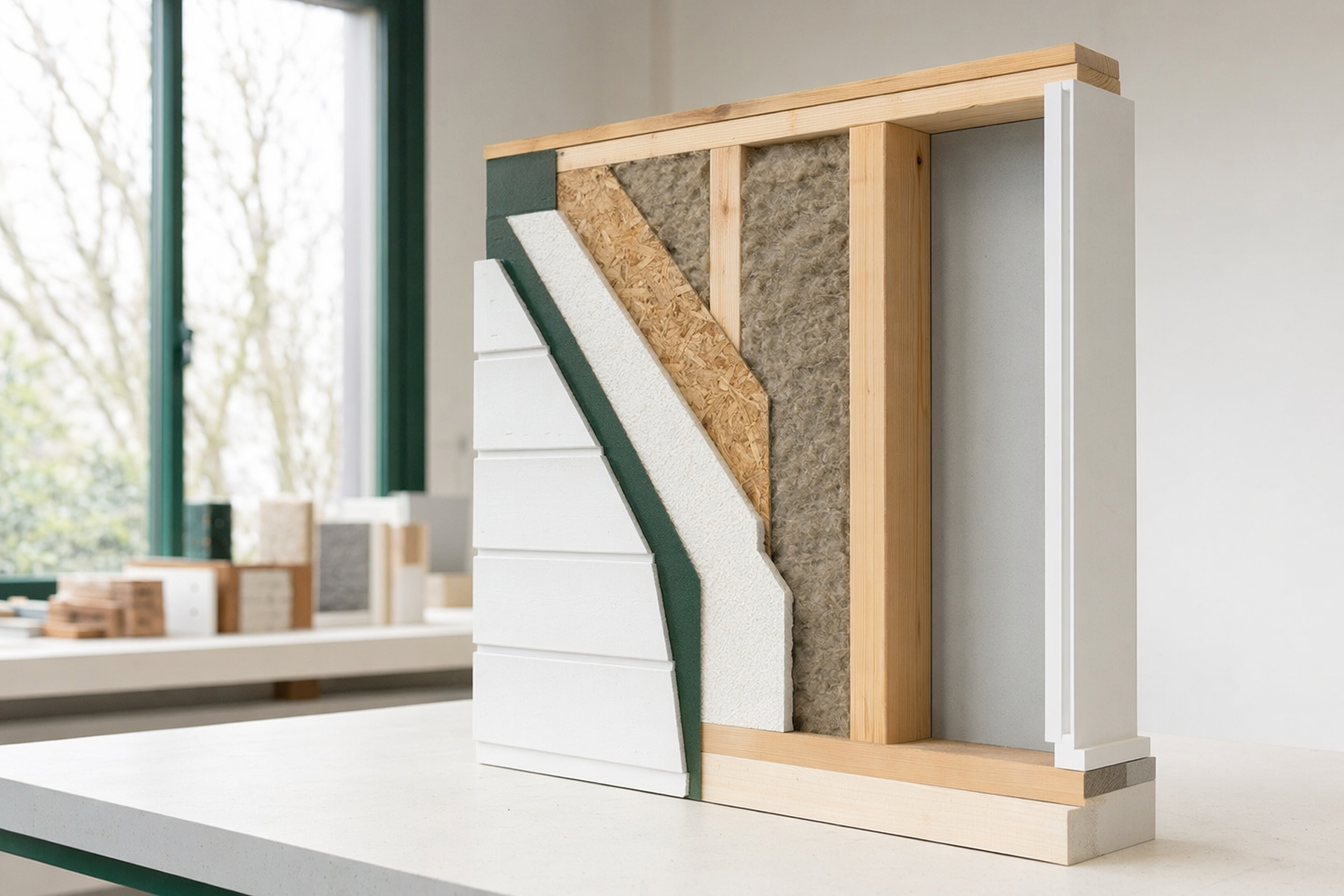
1. Start with a very strong building shell
A passive house works first because of the building shell. That means the walls, roof, floor, windows, and doors are built to slow heat flow. In winter, less heat escapes. In summer, less outdoor heat gets in.
This usually means more insulation, fewer thermal bridges, and careful detailing where parts of the house meet. Builders often talk about insulation with R-value. Higher R-values mean more resistance to heat flow, but the right target depends on your climate, design, and budget.
A passive-style home is not only about adding thick insulation. The parts have to work together. A good builder looks at the whole assembly, not just one material at a time.
2. Stop unwanted air leaks
Air leakage is a big reason many homes feel drafty and uneven. A passive house reduces those leaks with a continuous air barrier. This helps the home hold steady temperatures and reduces moisture problems inside walls.
Builders measure airtightness with a blower-door test. You may hear results discussed in ACH, or air changes per hour. Lower numbers mean less uncontrolled air leakage. The right target depends on the standard being used and how the house is designed.
Key points homeowners should ask about:
- Where is the air barrier on the plans?
- How will the builder seal around windows, doors, pipes, wires, and framing changes?
- Will they do one blower-door test, or test during construction and again at the end?
If you want help comparing builders who understand airtight construction, get matched through EverGrain Built. Our service is free. You compare and choose who to hire.
3. Use high-performance windows in the right places
Windows are important because they can either help or hurt the home's performance. A passive house usually uses high-performance windows and doors with good frames, good glass, and careful installation. You may see specs like U-factor and SHGC, or solar heat gain coefficient.
In simple terms, a lower U-factor means the window loses heat more slowly. SHGC tells you how much solar heat comes through the glass. In some climates, designers want more winter sun. In others, they work harder to limit summer overheating. That is why orientation, shading, and local weather matter.
Good windows alone do not make a passive house. They need proper flashing, air sealing, and placement in the wall assembly. A skilled builder should explain how their window details manage water, air, and insulation together.
4. Bring in fresh air with heat recovery
A passive house is very airtight, so it needs planned ventilation. Instead of relying on random leaks, it uses a balanced system, usually an HRV or ERV, to bring in fresh air and exhaust stale indoor air.
These systems recover heat from outgoing air, and in some cases help manage moisture too. That means the home can get fresh air without losing as much heating or cooling energy. The exact effect depends on the equipment, installation quality, filter maintenance, and local climate.
A good ventilation plan should answer a few basic questions. Where does fresh air come in. Where does stale air leave. How loud is the system. How easy is it to change filters and maintain it over time.
If you are new to these terms, our learn pages can help you build a better list of questions before you meet builders.
5. Right-size the heating and cooling systems
Because the shell does more of the work, a passive house often needs smaller heating and cooling equipment than a standard home of the same size. This is called right-sizing. Bigger is not always better. Oversized equipment can cycle on and off too often and may not control humidity well.
Many high-performance homes use heat pumps for heating and cooling. The best choice depends on your climate, utility rates, home layout, and how the house is modeled. Equipment should be selected after the design team looks at insulation levels, airtightness goals, window specs, and ventilation.
It helps to think in this order:
1. Reduce heating and cooling demand with the shell.
2. Plan ventilation and windows carefully.
3. Size the mechanical systems to fit the actual load.
If your goal is low energy use, all-electric living, or a path toward net-zero, ask builders how they coordinate the shell, ventilation, and equipment as one system. You can also read more about home systems and costs before you compare bids.
A passive house works because the home is built to keep heat, air, and moisture under better control. The goal is simple. A strong shell, good windows, fresh-air ventilation, and properly sized equipment all work together.
Common questions
Is a passive house the same as an eco-friendly or green home?
Not exactly. A passive house is a specific high-performance approach that focuses on reducing heating and cooling demand through insulation, airtightness, windows, ventilation, and careful design. A green home can include those ideas, but it may also focus on materials, water use, solar power, or other goals.
Does every passive house need a certification?
No. Some homes are built to passive-house principles without going through a formal certification process. If certification matters to you, ask the builder what standard they follow, what documents they provide, and what is included in the written scope and price.
Will a passive house always cost more?
Sometimes yes, sometimes not by much, and sometimes the budget shifts from one part of the home to another. Cost depends on climate, size, shape, site, finishes, local labor, and builder experience. Always ask for a written scope so you can compare bids clearly.
Can I build a passive-style home if English is not my first language?
Yes. You do not need to know every technical term to ask good questions. EverGrain Built is a free matching and guide service. We help homeowners compare experienced green builders, and you choose who to hire. Confirm scope, timeline, and price in writing with a licensed builder.