Learn
Green-building terms, in plain English
Green-building words can sound technical fast. This glossary explains common terms in simple language so you can ask better questions, compare builders, and feel more confident about your home plan.
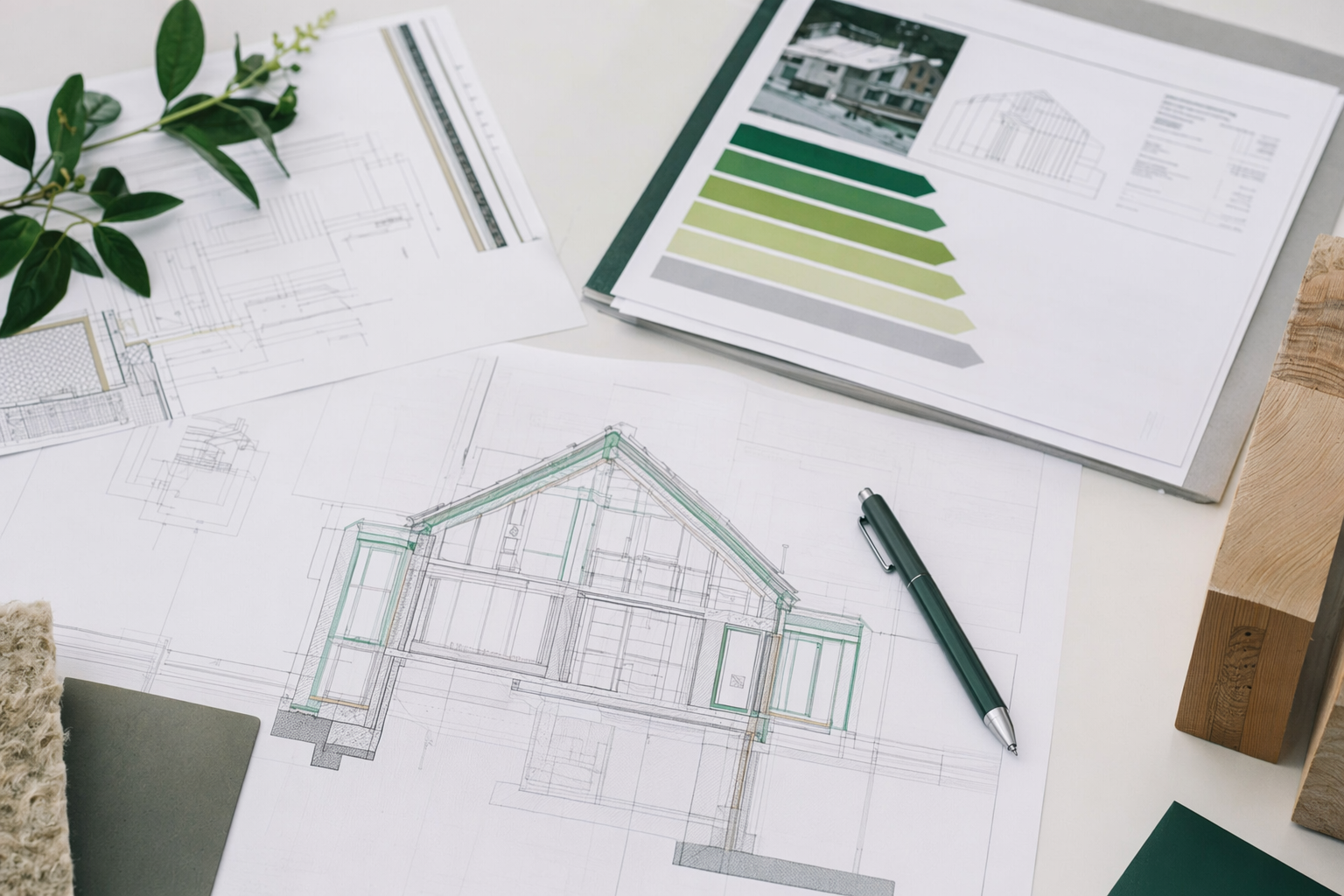
Why these terms matter
A green or passive-style home is not one single product. It is a group of design choices about the building shell, windows, air sealing, ventilation, heating, cooling, and materials.
If you know a few key terms, builder meetings get easier. You can ask what is included, how performance will be checked, and what should be confirmed in writing before you hire anyone.
EverGrain Built is a free matching and guide service. We help you compare experienced green custom-home builders near you. You choose who to hire, and you should confirm scope, price, permits, and performance goals in writing with a licensed builder.
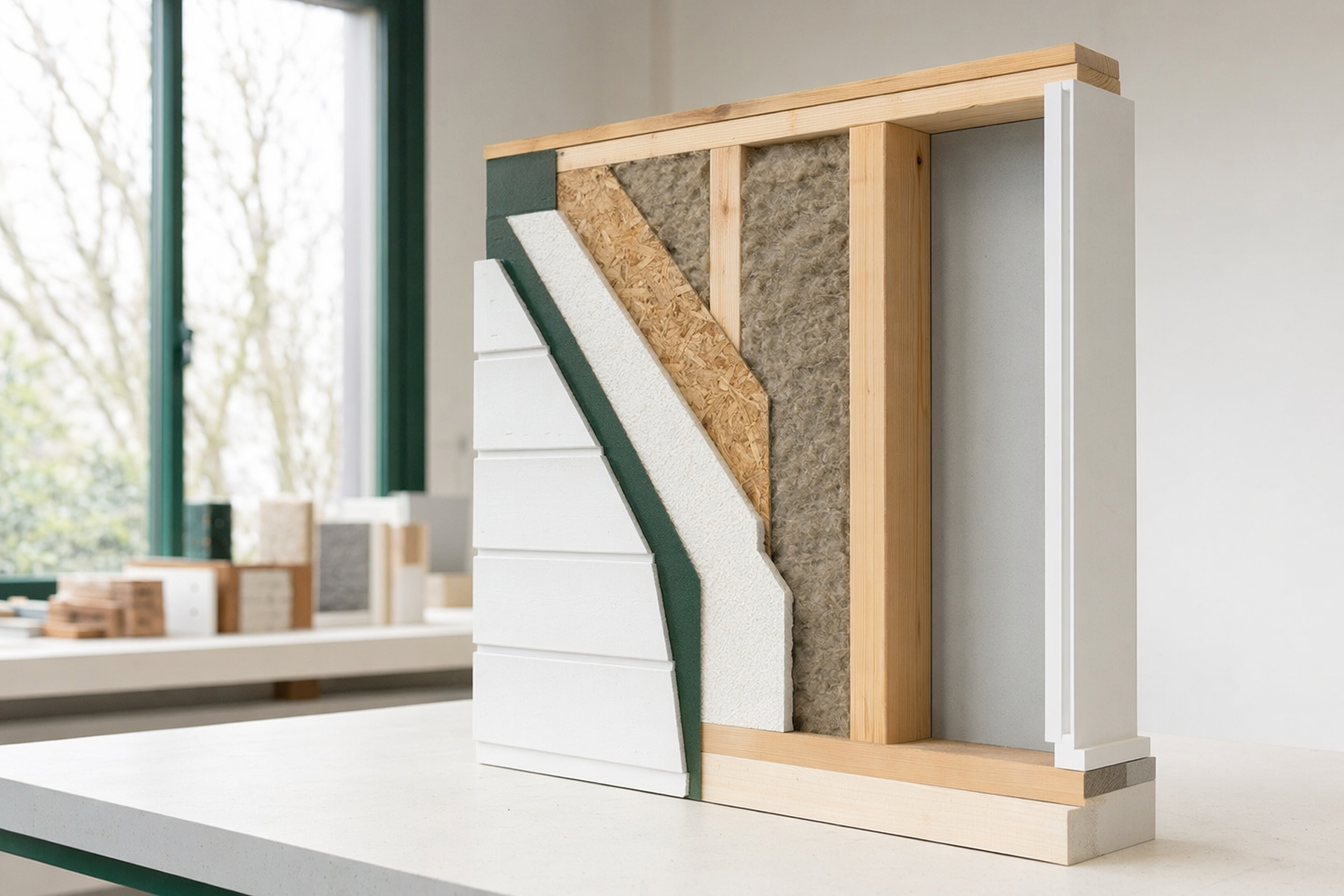
Core building-shell terms
Insulation R-value tells you how much a material slows heat flow. Higher R-value usually means better resistance to heat moving through that part of the home, but the full wall or roof assembly matters too.
Airtightness means how much outside air leaks in through cracks and gaps. This is often measured as ACH, or air changes per hour, during a blower-door test. Lower ACH means less uncontrolled air leakage.
Thermal bridge is a spot where heat moves through a building part more easily than the areas around it. Common examples are framing, slab edges, balconies, and some metal connections. Good design tries to reduce these weak points.
Envelope or building shell means the parts that separate indoors from outdoors. That includes walls, roof, floor, windows, doors, and the air barrier.
Window and glass terms
Windows do more than let in light. In high-performance homes, builders often discuss these terms:
- U-factor. How fast heat moves through the whole window. Lower numbers usually mean less heat transfer.
- SHGC, or solar heat gain coefficient. How much solar heat passes through the glass. The right target depends on climate, orientation, and shading.
- Glazing. The glass layers in a window, such as double-pane or triple-pane.
- Low-E coating. A thin coating on glass that helps control heat transfer.
A window that works well in one climate may not be the best fit in another. Ask how the window choice matches your site, sun exposure, and comfort goals. If you want help finding builders who understand these tradeoffs, visit /get-matched/.
Fresh air, heating, and energy terms
A tighter home needs planned fresh air. That is where HRV and ERV systems come in. An HRV, heat recovery ventilator, brings in fresh air and exhausts stale air while transferring heat between the two air streams. An ERV, energy recovery ventilator, does a similar job and also helps transfer some moisture.
Heat pump is an electric system that moves heat instead of creating it by burning fuel. Heat pumps can provide heating and cooling, and some also heat water. Performance depends on equipment choice, climate, design, and installation quality.
You may also hear all-electric and net-zero. All-electric means the home uses electricity instead of fossil fuels for major systems. Net-zero usually means the home is designed so annual energy use may be balanced by on-site renewable production, often solar, but results vary by occupancy, weather, and final equipment choices.
For a bigger picture of how these parts work together, see /systems/ and /learn/.
Materials, carbon, and testing terms
Embodied carbon means the greenhouse gas emissions linked to making, transporting, installing, maintaining, and disposing of building materials. This is different from operational energy, which is the energy the home uses during everyday living.
Commissioning means checking that systems are installed and working as intended. In a green home, this may include setup, balancing, and testing of ventilation, heating, cooling, and hot-water equipment.
Three useful terms to know during planning are:
- Blower-door test. A test that measures air leakage in the home.
- Manual J, S, and D. Common HVAC design methods for load calculations, equipment sizing, and duct design.
- Scope in writing. A clear written list of what the builder includes, what is an allowance, and what performance targets are actually promised.
These terms help you compare proposals fairly. EverGrain Built is not a builder or contractor. We are a free matching service that helps you meet builders and ask better questions. You can learn more at /how-it-works/ and /costs/.

You do not need to memorize every term. Learn the basics, ask clear questions, and get the builder to put key specs and testing steps in writing.
Common questions
What is the difference between green building and passive house?
Green building is a broad idea. It can include energy efficiency, healthier materials, lower waste, better durability, and cleaner equipment. Passive house usually refers to a stricter performance approach that focuses heavily on insulation, airtightness, windows, thermal-bridge control, and balanced ventilation. Not every green home is passive-house level, and not every builder uses the same standard or certification path.
What ACH number should I ask for?
ACH targets vary by program, climate, design, and builder experience. A lower ACH generally means a tighter home, but the right goal should fit the full design and ventilation plan. Ask the builder what airtightness target they are proposing, how they plan to reach it, and whether a blower-door test is included in the contract.
Do I need triple-pane windows and an ERV for every green home?
Not always. Some homes benefit from triple-pane windows, while others may use different window specs based on climate, budget, orientation, and design goals. HRV or ERV choices also depend on airtightness, humidity conditions, and the ventilation strategy. Ask the builder to explain why each choice fits your project, and get those specs in writing.
Can EverGrain Built tell me which builder is best?
We can help you compare experienced green custom-home builders near you, for free. But you decide who to hire. Review licenses, insurance, references, scope, timeline, and price carefully, and confirm all important details in a written agreement with the builder you choose.