Learn
How to choose a green builder
A green builder should do more than say the right words. You want a builder who can explain their process, show past work, and put the important details in writing. A careful choice now can help you avoid confusion later.
Start with proof, not marketing
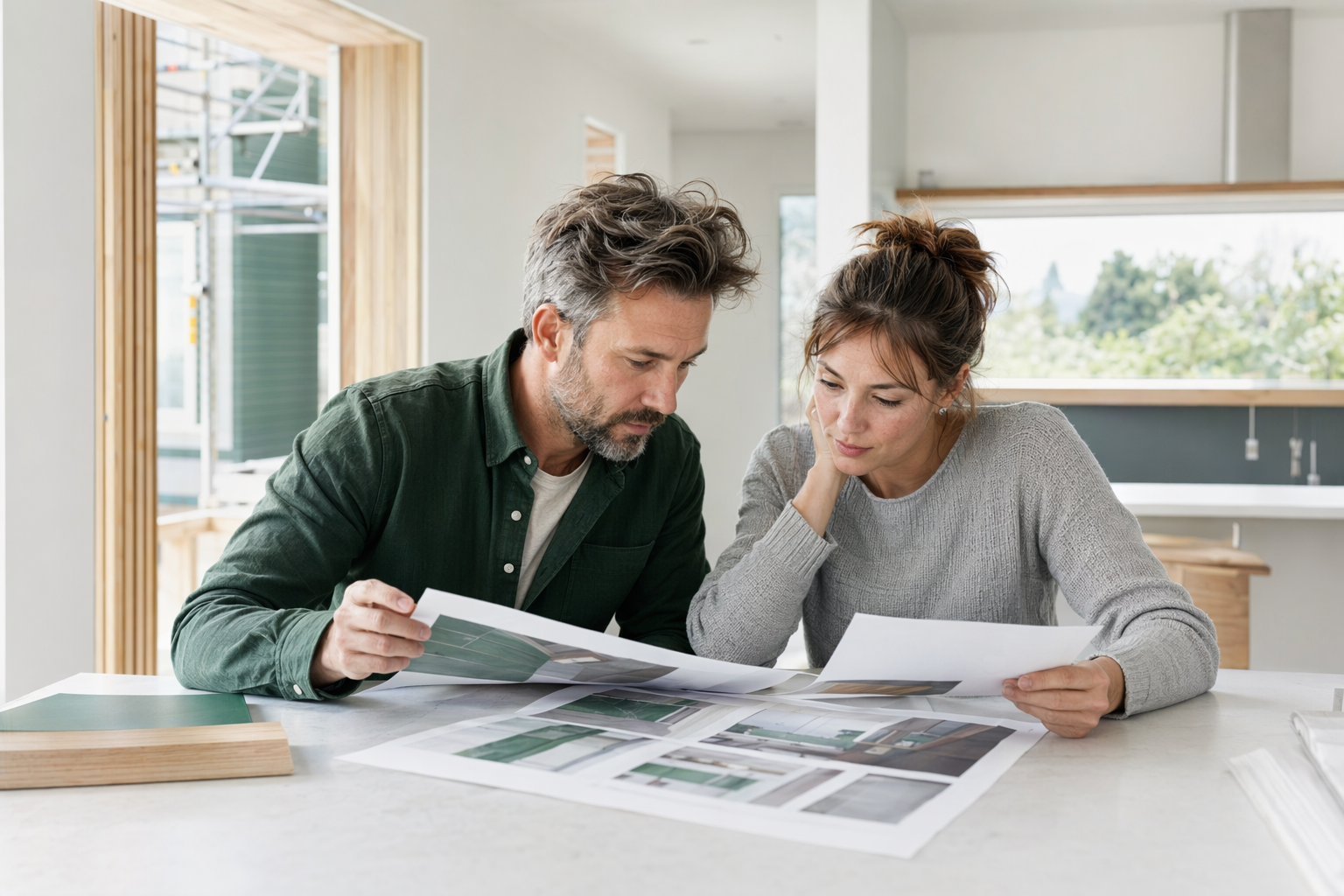
Many builders say they can build a high-performance home. Some can. Some are still learning. Ask for real examples of homes they have built that used better insulation, careful air sealing, good windows, balanced ventilation, or all-electric systems.
Ask what parts of the work they did themselves and what parts were handled by subs. A good builder should be able to explain how they manage framing, insulation, air sealing, HVAC, and window installation so the whole house works together.
If you are early in the process, EverGrain Built can match you with builders who say they have experience with green, energy-efficient, or passive-style homes. It is a free matching service. You compare options and decide who to hire.
Ask specific questions about building methods
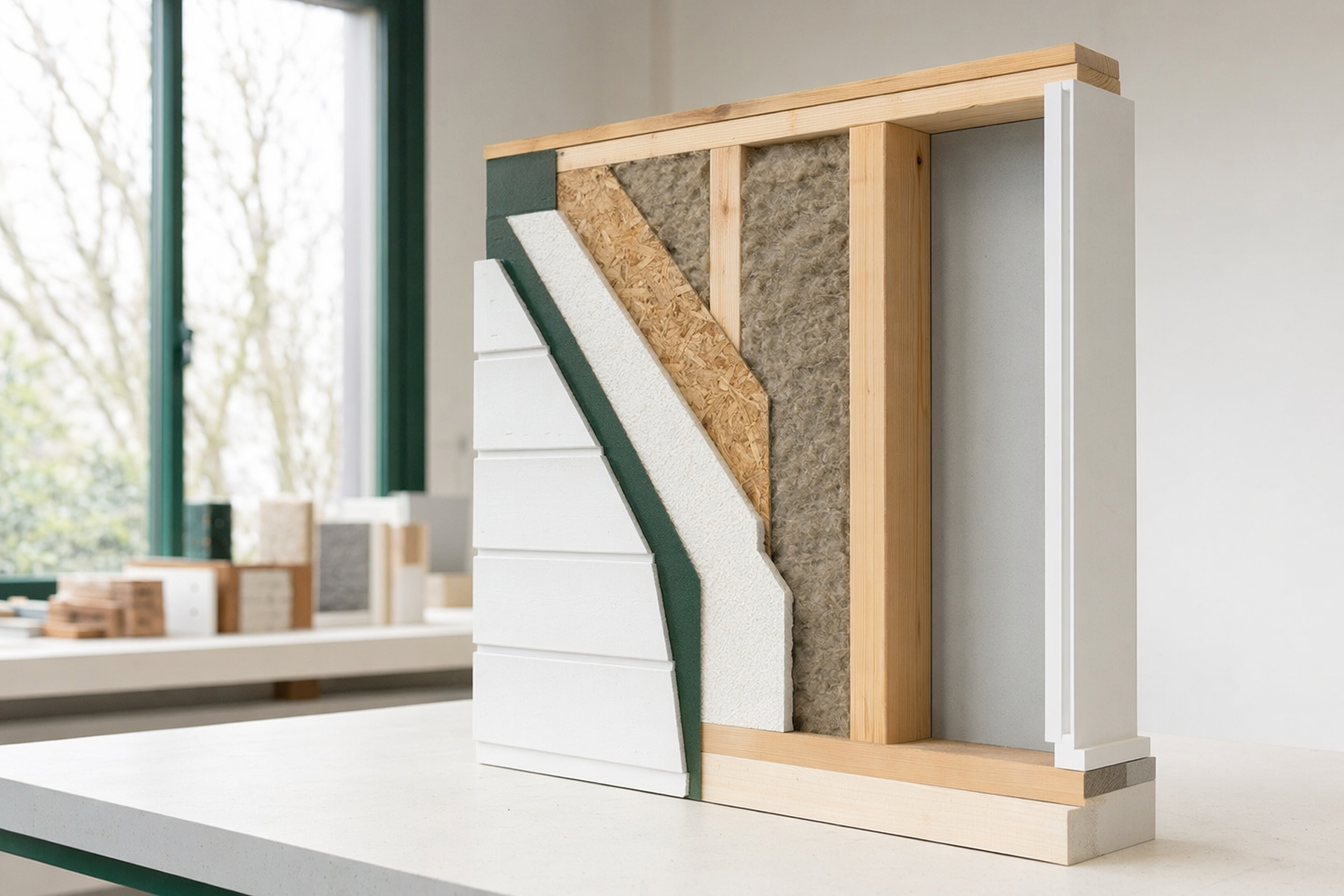
Green building is not one product. It is a set of choices that work together. Ask the builder how they approach the building envelope, mechanical systems, and moisture control.
Useful questions include:
- What insulation levels do you usually build to, and where?
- How do you air seal the home, and do you set an airtightness target in ACH?
- Do you use a blower-door test, and when during construction?
- What window performance do you look for, such as U-factor and SHGC?
- Do you install an HRV or ERV in tighter homes?
- How do you size heat pumps and ventilation systems?
A strong builder may not use the same assembly on every house. That is normal. Climate, site, budget, and design all matter. What you want is a clear method, not vague promises. You can also review basic concepts on our systems page and more guides in Learn.
Look at plans, details, and test results
Past-project photos are helpful, but they are not enough. Ask to see sample wall sections, window details, ventilation layouts, or a scope sheet that shows what the builder actually includes.
If the builder talks about passive-house methods or very high performance, ask what evidence they track. Examples may include blower-door test results, insulation specs, HVAC commissioning notes, or product schedules for windows and doors.
Not every good green builder has every certification. But they should be comfortable discussing measurable items like R-value, ACH, U-factor, and ventilation strategy in plain language. If they cannot explain the basics, that is a concern.
Check communication, team fit, and written scope
A green home needs coordination. The builder should communicate clearly with you, the designer, and trade partners. This matters even more if English is not your first language. It is okay to ask people to slow down, repeat, or put things in writing.
Before you sign anything, ask for a written proposal or scope that covers the main performance-related items. This might include insulation targets, air sealing steps, window specifications, ventilation equipment, HVAC approach, and testing. Confirm who is responsible for each item.
- Ask who will supervise the job day to day.
- Ask how design changes are approved and priced.
- Ask how they handle substitutions if a product is unavailable.
- Ask what will be verified before final payment.
You can compare these points across builders. If you want help finding companies to interview, see how EverGrain Built works or request a free match at /get-matched/.
Know the red flags
Some warning signs are easy to miss, especially if a builder sounds confident. Be careful if someone makes big claims but avoids details.
Red flags include:
- They promise exact energy savings, comfort, or certification results before seeing your site and plans.
- They say airtight homes do not need mechanical ventilation.
- They cannot explain blower-door testing, moisture control, or window performance.
- They refuse to put scope, materials, and testing in writing.
- They dismiss your questions about permits, licensing, insurance, or subcontractors.
- They push you to sign fast without time to compare bids.
A good builder should welcome thoughtful questions. You are hiring a professional for a major project. Take time to compare experience, communication, and written scope, not just price. For budgeting help, review our costs guides.
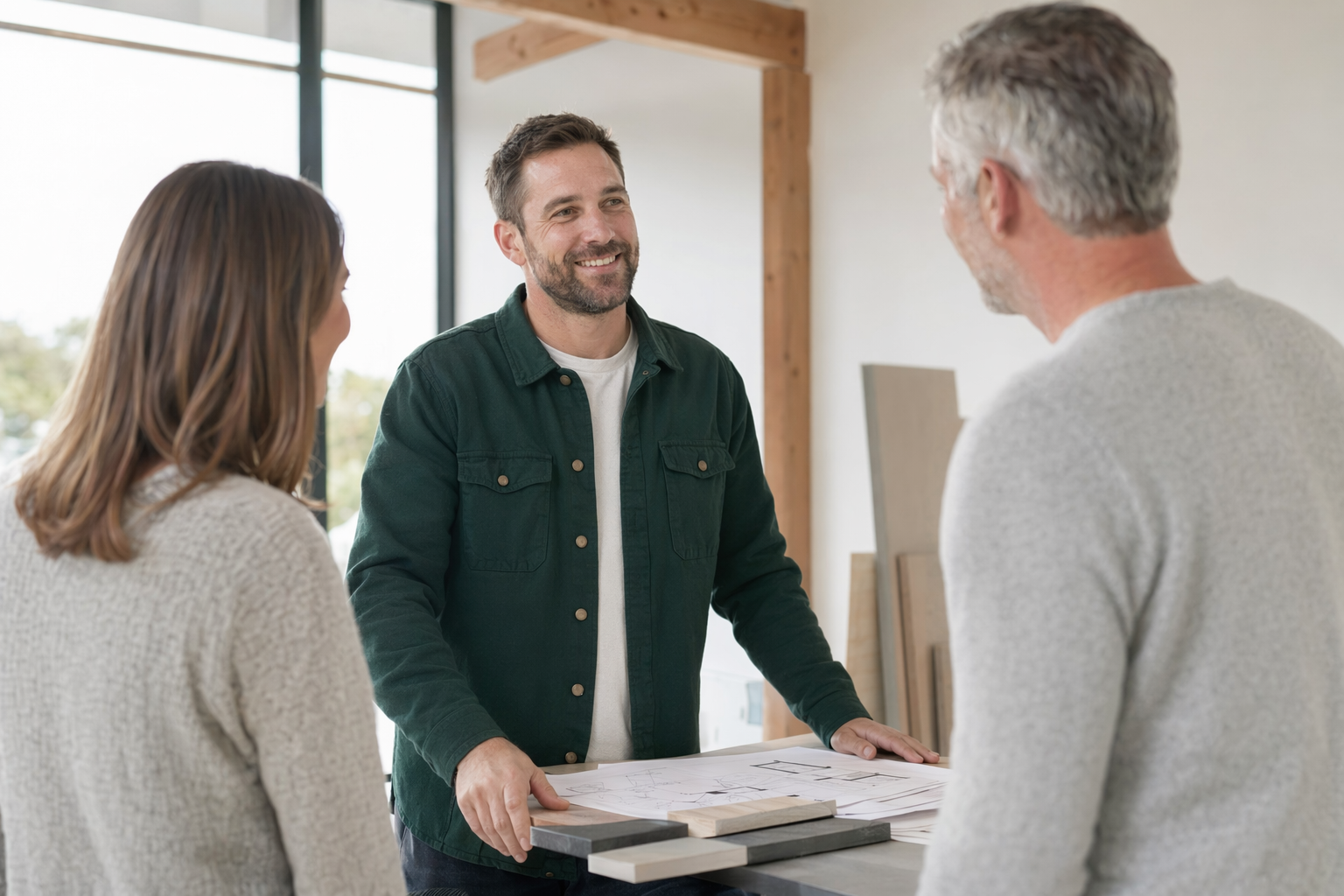
Choose a builder who can explain the details, show proof, and put the important work in writing. Clear process beats big promises.
Common questions
Do I need a builder with a green or passive-house certification?
Not always. A certification can be helpful, but it is not the only sign of skill. Ask for past-project evidence, test results, and a clear process for insulation, air sealing, windows, ventilation, and HVAC. Confirm the final scope and price in writing with the licensed builder you choose.
What is the most important thing to ask a green builder?
Ask how they build the envelope and how they verify performance. Good follow-up questions include insulation R-values, airtightness targets in ACH, blower-door testing, window specs like U-factor and SHGC, and whether they use an HRV or ERV in tighter homes.
Can EverGrain Built tell me which builder to hire?
No. EverGrain Built is a free matching and guide service. We help you find builders to compare. You choose who to interview and hire. Always confirm licensing, scope, schedule, and price directly with the builder in writing.
Is the cheapest bid usually the best value for a green home?
Not necessarily. A lower bid may leave out air sealing steps, better windows, ventilation, testing, or project supervision. Compare what is included, how it will be built, and what will be verified. Make sure each builder is pricing the same scope.