Building systems
Insulation & the building shell
The building shell is the part of the home that separates indoors from outdoors. It includes the roof, walls, floor, windows, doors, air sealing, and insulation. When these parts work together well, a green or passive-minded home can be more stable, quieter, and easier to heat and cool.
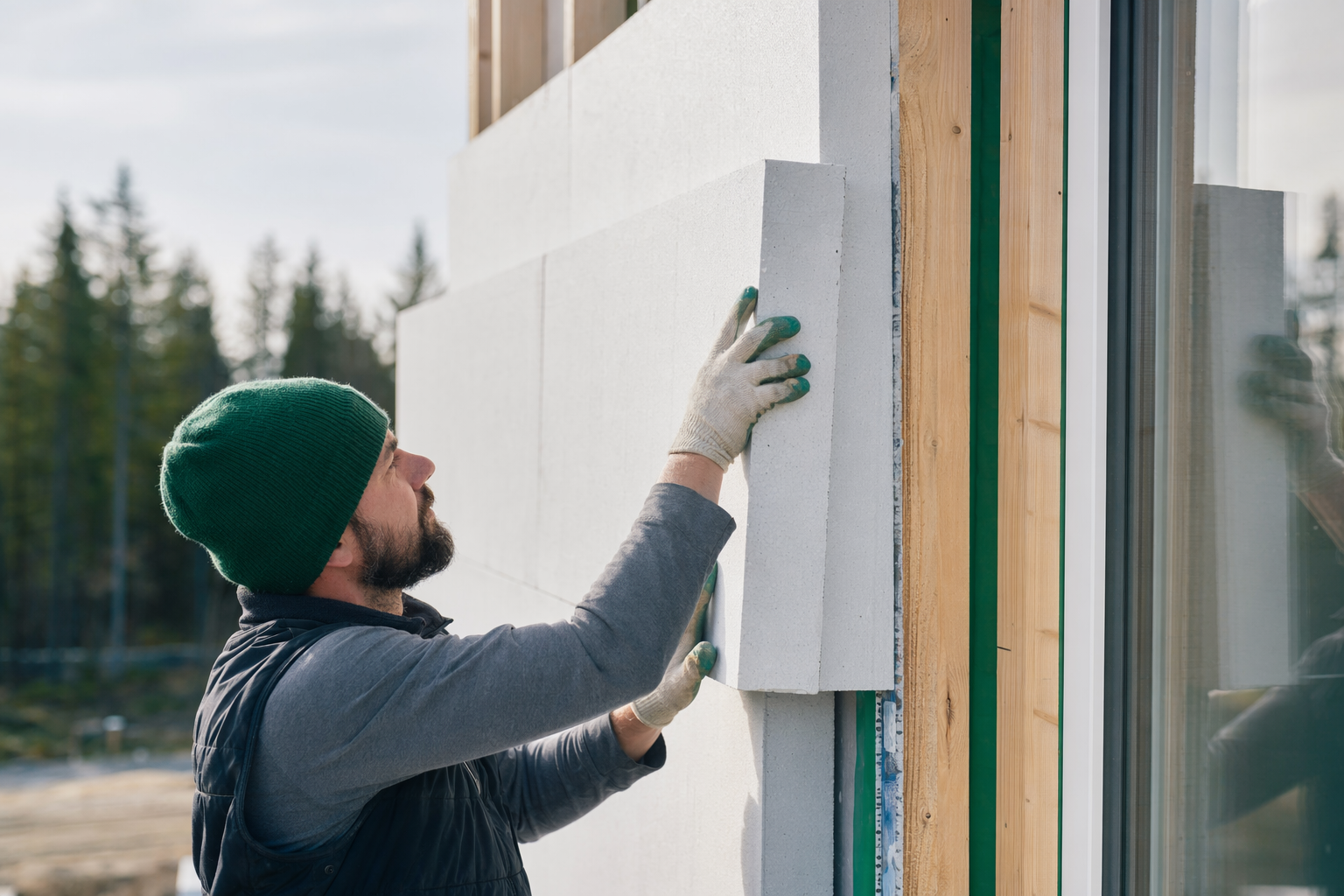
What the building shell does
A strong building shell slows heat flow, limits unwanted air leaks, and manages moisture. It is a basic part of energy-efficient home design, not just an upgrade.
Insulation is only one piece. The shell also depends on careful air sealing, good window performance, and details that reduce thermal bridges, which are spots where heat moves through wood, steel, concrete, or other materials more easily than the insulated areas.
If you are early in planning, our systems overview can help you see how the shell works with HVAC, ventilation, and windows.
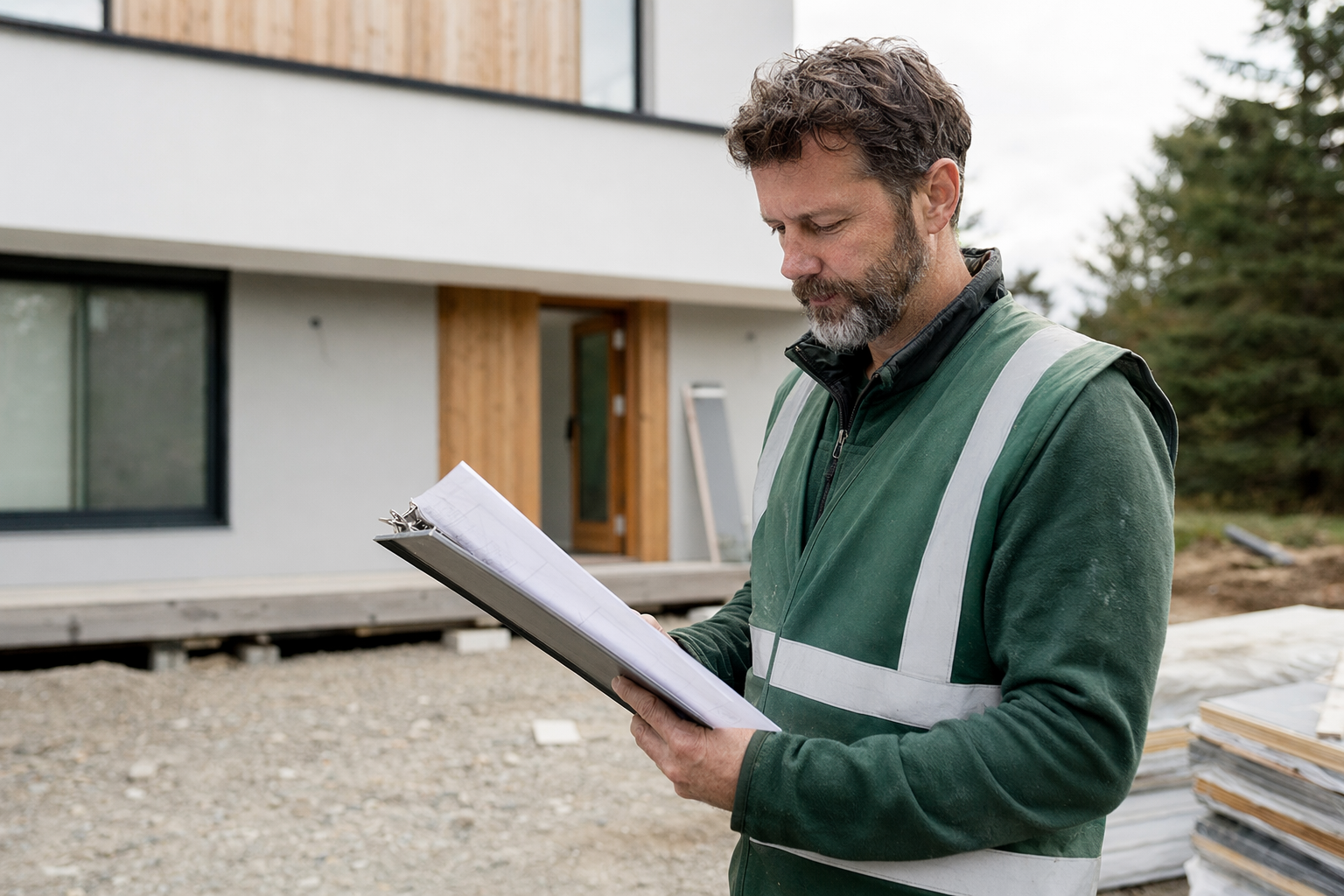
Why continuous insulation and air sealing matter
Many homes have insulation in the cavities between studs or rafters, but still lose heat through framing and gaps. A better shell often uses continuous insulation and a clear air barrier so the home performs more like one connected system.
Good air sealing is usually checked with a blower-door test. Builders often talk about airtightness in ACH, or air changes per hour. Lower leakage can help the heating and cooling system work more effectively, but the right target depends on your design, climate, and goals.
Key shell ideas to discuss with a builder:
- R-value for walls, roof, and floor assemblies
- Continuous exterior insulation where appropriate
- Air barrier location and how it stays continuous
- Window U-factor and SHGC for your climate
- Blower-door testing during or after construction
- How the assembly dries if it ever gets wet
Insulation types and where they are used
Different insulation products do different jobs. A builder may use one type or a mix, depending on the part of the house and the wall or roof assembly.
Common options include batt insulation, blown-in cellulose, dense-pack fiberglass, rigid board insulation, mineral wool, and spray foam. Each has tradeoffs for cost, air sealing, fire resistance, moisture behavior, thickness, and ease of installation.
What matters most is not just the product name. It is how the full assembly is detailed and installed. A well-detailed wall with moderate R-value can outperform a higher-R wall with gaps, compression, or poor moisture control.
If you want help comparing local builders who understand these details, you can start here: Get matched.
Moisture, ventilation, and avoiding problems
A tight, well-insulated home still needs to handle moisture safely. Warm air can carry water vapor into walls and roofs. Rain can also get behind cladding. Good shell design plans for both.
Builders manage this with layers that control water, air, vapor, and heat. The right approach depends on climate, interior humidity, and the materials in the assembly. There is no one perfect wall for every region.
A tighter home also needs planned fresh air. That is why many green and passive homes use an HRV or ERV. Ventilation is not a replacement for insulation and air sealing, but it works with them to support indoor air quality and comfort.
What to ask builders before you hire
You do not need to know every technical term. But a few clear questions can help you compare builders in a practical way.
- What wall, roof, and floor assemblies do you usually build, and why?
- How do you reduce thermal bridging?
- Where is the air barrier, and how do you keep it continuous?
- Do you test airtightness with a blower-door test?
- What window specs do you suggest for this climate?
- How do you handle rain control and drying potential?
- What is included in the written scope, and what costs extra?
EverGrain Built is a free matching service. We help you find builders experienced in green, energy-efficient, or passive-minded homes. You compare options and choose who to hire. Always confirm scope, materials, testing, timeline, and price in writing with a licensed builder. You can also learn more about our process at How it works.

A good building shell is more than thick insulation. The goal is a well-detailed system that controls heat, air, and moisture together.
Common questions
Is more insulation always better?
Not always. More insulation can help, but only if the full assembly is designed well. Air leaks, thermal bridges, moisture risks, window quality, and installation quality all matter too.
What is a thermal bridge?
A thermal bridge is a part of the building shell that lets heat pass through more easily than the insulated parts. Common examples are wall studs, steel parts, concrete edges, and poorly detailed connections around windows, balconies, and foundations.
Do I need a blower-door test?
Many homeowners find it useful because it shows how much air leakage the home has and can help find hidden gaps. Some high-performance builders test more than once during construction so problems can be fixed before finishes are complete.
Can EverGrain Built tell me which insulation system is best for my house?
We do not design or build homes, and we do not sell insulation. We are a free guide and matching service. We can help you connect with experienced builders, then you can compare their approach and confirm details in writing with the licensed builder you hire.