EverGrain Built
The building systems that make a home efficient
A high-performance home is not one product. It is a group of building systems that work together to reduce wasted energy and improve comfort, air quality, and durability. Green and passive-focused builders pay close attention to these parts early, because small decisions can affect the whole home.
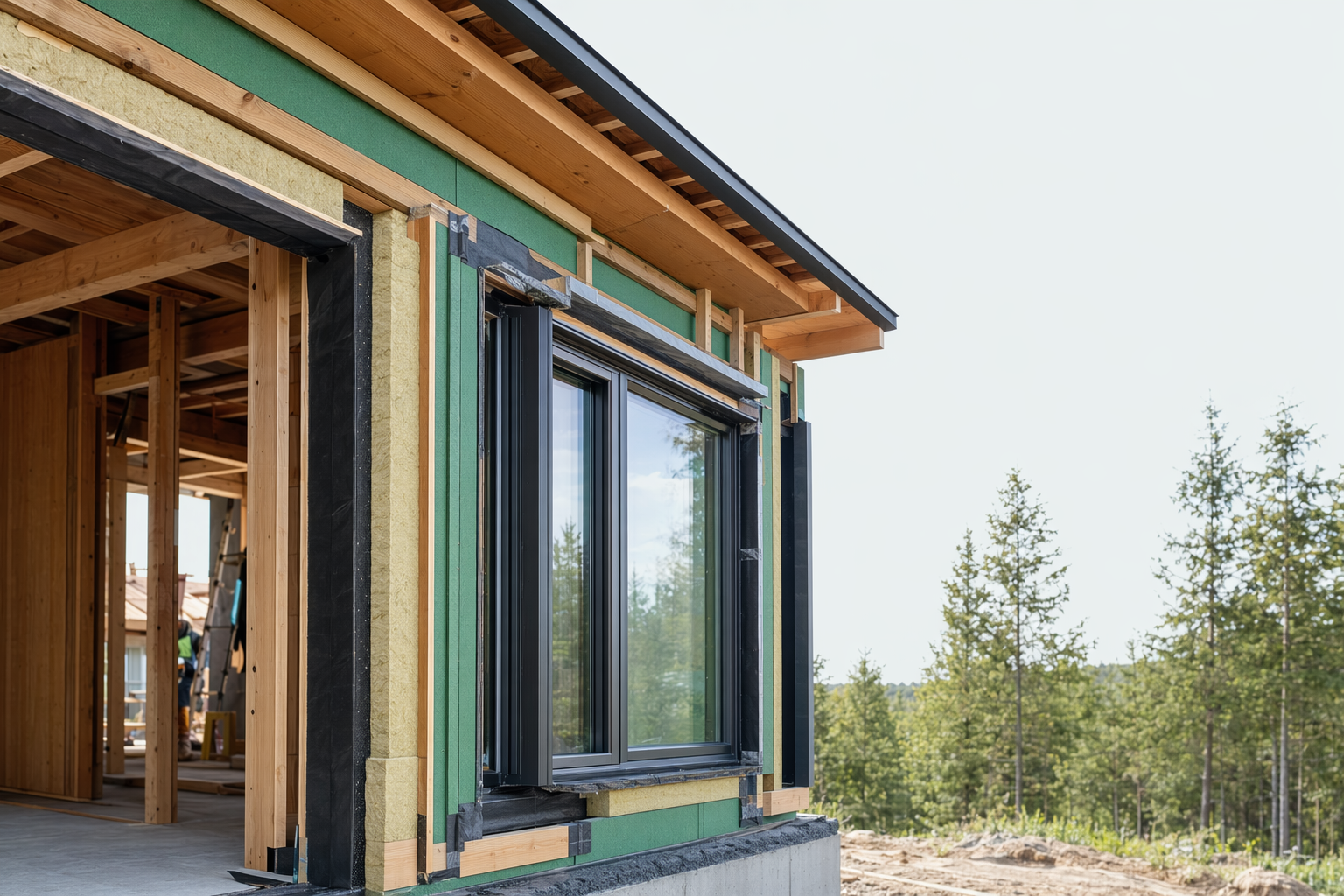
How a continuous, well-insulated building shell keeps a green home comfortable and cheap to run, and how builders detail it to avoid thermal bridges and moisture problems.
Open → Airtightness & air sealingWhy airtight construction is the quiet workhorse of an efficient home, how the blower-door test measures it in ACH, and what a tight air barrier means for comfort and bills.
Open → High-performance windows & doorsHow triple- and high-spec double-glazed windows and insulated doors cut heat loss, block noise, and remove cold spots — and how to read U-factor and SHGC.
Open → Fresh-air ventilation (HRV / ERV)How heat- and energy-recovery ventilation delivers constant filtered fresh air while recovering most of the heat, and why a tight home needs mechanical ventilation.
Open → Heat pumps & efficient HVACWhy a high-performance shell lets a small, all-electric heat pump heat and cool a whole home, how to size it right, and what efficient HVAC looks like in a green build.
Open → Solar-ready & net-zero homesWhat it means to build solar-ready and all-electric, how net-zero and net-zero-ready homes work, and the simple wiring and panel choices that keep the option open.
Open →The core systems behind an efficient home
Insulation, air sealing, windows, ventilation, and heating and cooling all work as one system. If one part is weak, the others may have to work harder. That is why experienced green builders plan the full assembly, not just one upgrade.
- Insulation slows heat flow through walls, roofs, and floors. You may hear this described with R-value.
- Airtightness limits uncontrolled air leaks. Builders often measure this with a blower-door test and report it in ACH.
- Windows and doors affect heat gain, heat loss, and comfort. Important numbers include U-factor and SHGC.
- Ventilation brings in fresh air in a controlled way. Many efficient homes use an HRV or ERV.
- Heating and cooling is often handled with heat pumps, sized for the home and climate.
A good builder also looks at roof details, moisture control, shading, and the home's orientation on the site. If you want help comparing builders who understand these systems, get matched for free through EverGrain Built.
You can learn more about the full process on how it works and explore other topics in our learn section.
How these systems work together in real life
A tighter, better-insulated home usually needs less heating and cooling than a leaky one. But tight homes also need planned fresh air. That is why ventilation matters. A builder should think about comfort, moisture, indoor air, and equipment sizing together.
For example, high-performance windows can help reduce drafts near the glass. Good air sealing can help rooms feel more even. A well-designed HRV or ERV can bring in filtered outdoor air. A right-sized heat pump can often handle heating and cooling efficiently, but the final design depends on your climate, layout, and goals.
Many homeowners also ask about solar-ready or net-zero planning. Solar-ready design can include roof space, electrical planning, and a layout that makes future panels easier. Net-zero means the home produces as much energy as it uses over time, but that result depends on design, equipment, weather, and how the home is operated.
Before you hire anyone, ask for the scope in writing. Confirm what testing, equipment, insulation levels, and window specs are included. You can also review typical project questions on our costs page, then use get matched to compare licensed builders near you.
An efficient home works best when all the main systems are planned together. EverGrain Built helps you compare builders who understand that approach, and you choose who to hire.
Thinking about an energy-efficient or passive home?
Start with the basics of how a high-performance home works. Then get matched, free, with green builders who serve your area. You compare and choose who to hire — and confirm the price in writing before any work starts.