Building systems
Fresh-air ventilation (HRV / ERV)
A tight, energy-efficient home still needs fresh air. An HRV or ERV is a whole-house ventilation system that brings in filtered outdoor air, removes stale indoor air, and recovers much of the heat that would otherwise be lost.
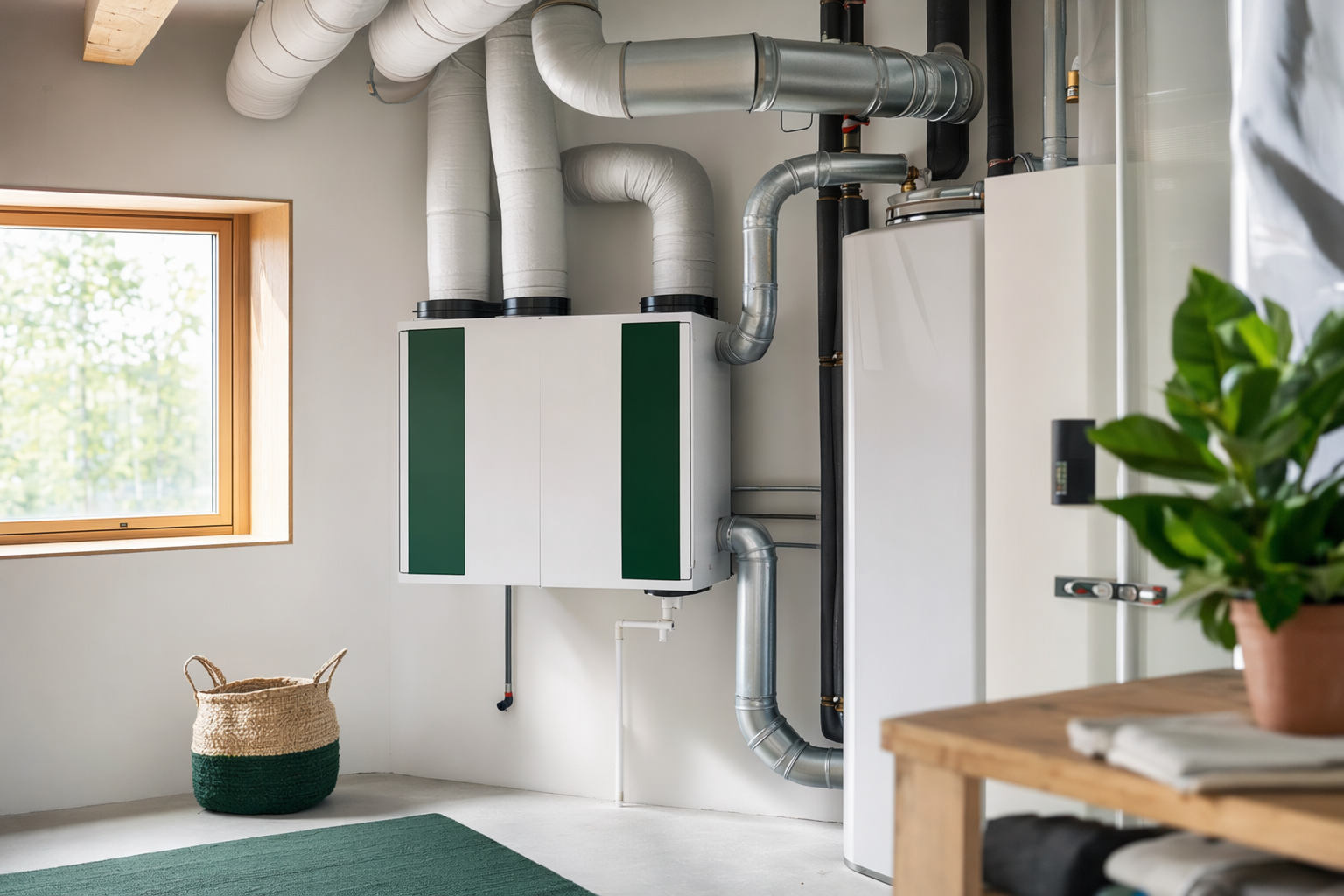
Why a tight home needs mechanical ventilation
Modern green and passive homes are built to reduce uncontrolled air leaks. That is good for energy use and comfort, but it also means less natural fresh air sneaks in through cracks.
Without planned ventilation, indoor air can feel stuffy. Cooking odors, moisture, and pollutants from people, pets, cleaners, and building materials can build up. A mechanical ventilation system gives your home a steady, controlled way to exchange air.
An HRV or ERV is often part of that plan. If you are comparing systems for a new build, our free service can help you get matched with builders who understand high-performance homes.
What HRVs and ERVs do
Both systems move two air streams at the same time. One brings fresh outdoor air in. The other exhausts stale indoor air out.
Inside the unit, the air streams pass through a heat-exchange core. In cold weather, the outgoing warm air helps warm the incoming fresh air. In hot weather, the reverse effect can help reduce the load on the cooling system.
The main difference is moisture transfer:
- HRV, heat recovery ventilator. Transfers heat, but usually not much moisture.
- ERV, energy recovery ventilator. Transfers heat and also some moisture.
Which one fits best depends on your climate, your home's airtightness, and your family's needs. A builder or HVAC designer should size and select the system for your project.
How this fits into a green or passive home
Fresh-air ventilation works best as part of a whole-house plan. That plan may also include good insulation, careful air sealing, high-performance windows, and efficient heating and cooling such as heat pumps.
In very airtight homes, ventilation is not an upgrade you add at the end. It is a basic system, like plumbing or heating. Many high-performance projects also use a blower-door test to measure airtightness in ACH, air changes per hour, and confirm how tight the home really is.
A well-designed ventilation system should be planned with the duct layout, filter access, noise control, and balancing in mind. That is one reason it helps to compare builders who have real experience with green and passive construction. You can learn more about the process at how it works.
Questions to ask your builder
Do not assume every builder handles ventilation the same way. Ask direct questions and get the final scope in writing.
- What ventilation system do you recommend, HRV or ERV, and why for my climate?
- How will the system be sized and balanced?
- Where will fresh air be supplied and stale air be exhausted?
- What filters does it use, and how easy are they to replace?
- How will you control noise from the unit and ductwork?
- Will the home get a blower-door test, and what airtightness target are you building toward?
It is also smart to ask how the ventilation system will work with your kitchen exhaust, bath fans, dehumidification needs, and heating and cooling equipment. Review costs, equipment model numbers, and installation details before you sign with a licensed builder.
What EverGrain Built does
EverGrain Built is not a builder, architect, or contractor. We are a free matching service that helps homeowners plan a green, energy-efficient, or passive home and compare experienced custom-home builders near them.
You tell us about your project goals, location, and budget range. We help you connect with builders who may be a fit for your home and your priorities, including ventilation, airtightness, insulation, and other high-performance systems.
You compare your options and choose who to hire. Always confirm scope, equipment, price, timeline, and warranty terms in writing with a licensed builder. If you are ready to start, you can get matched or explore more topics in systems and learn.

A tight home needs planned fresh air. An HRV or ERV helps bring in filtered outdoor air and remove stale indoor air while saving much of the heat that would otherwise be lost.
Common questions
Do I need an HRV or ERV if I can open windows?
Windows can bring in fresh air, but they do not provide steady, whole-house ventilation in all weather. A mechanical system is useful in a tight home because it gives controlled air exchange year-round, even when windows stay closed for temperature, noise, pollen, smoke, or security reasons.
What is the difference between an HRV and an ERV?
An HRV mainly transfers heat between outgoing and incoming air. An ERV transfers heat and also some moisture. The better choice depends on climate, indoor humidity patterns, and the rest of the home's design. Your builder or HVAC designer should recommend the system based on your specific project.
Will an HRV or ERV make my home healthier?
These systems can help improve indoor air quality by bringing in filtered outdoor air and exhausting stale indoor air. But results vary. Filtration level, duct design, maintenance, source control, moisture management, and how the home is used all matter too.
How much does an HRV or ERV cost?
Cost varies by home size, layout, climate, duct routing, equipment choice, and local labor. Installation in a new custom home is different from a retrofit. Ask each builder for a written scope that shows the unit, ducts, controls, filters, balancing, and commissioning work so you can compare quotes fairly.