Building systems
Heat pumps & efficient HVAC
A heat pump can heat and cool a green home with one all-electric system. The key is not just the equipment. It is a well-insulated, airtight house that lowers the heating and cooling load so the system can be smaller and simpler.
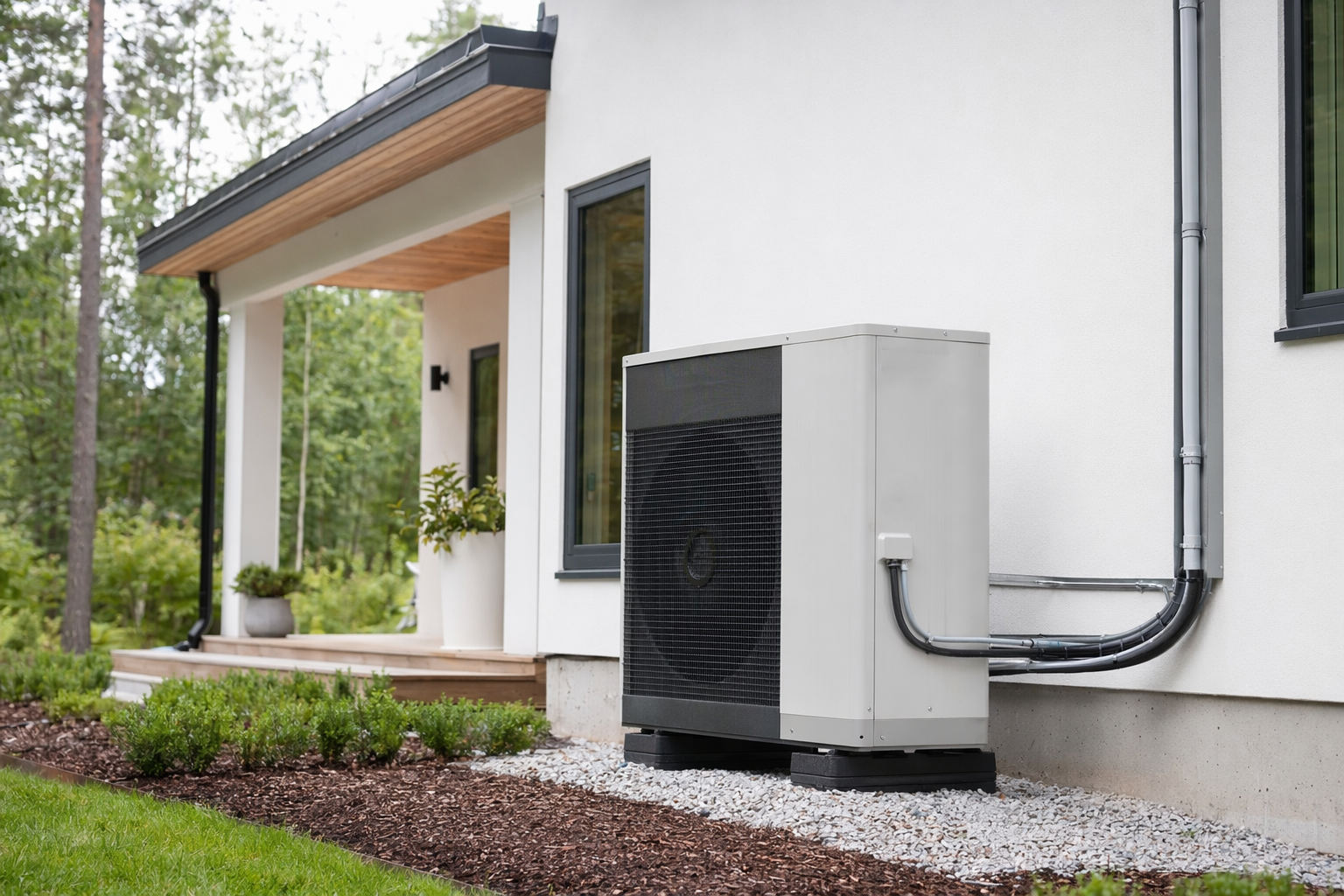
Why the house shell comes first
In a high-performance home, the walls, roof, windows, and air sealing do a lot of the work. Good insulation, low air leakage, and better windows reduce heat loss in winter and heat gain in summer.
That matters because HVAC should follow the house design, not lead it. A weak shell often needs larger equipment and more ductwork. A strong shell can often use a smaller heat pump and still keep temperatures more even.
If you are early in planning, start with the full picture at systems and compare builders through our free get matched service.
What a heat pump does
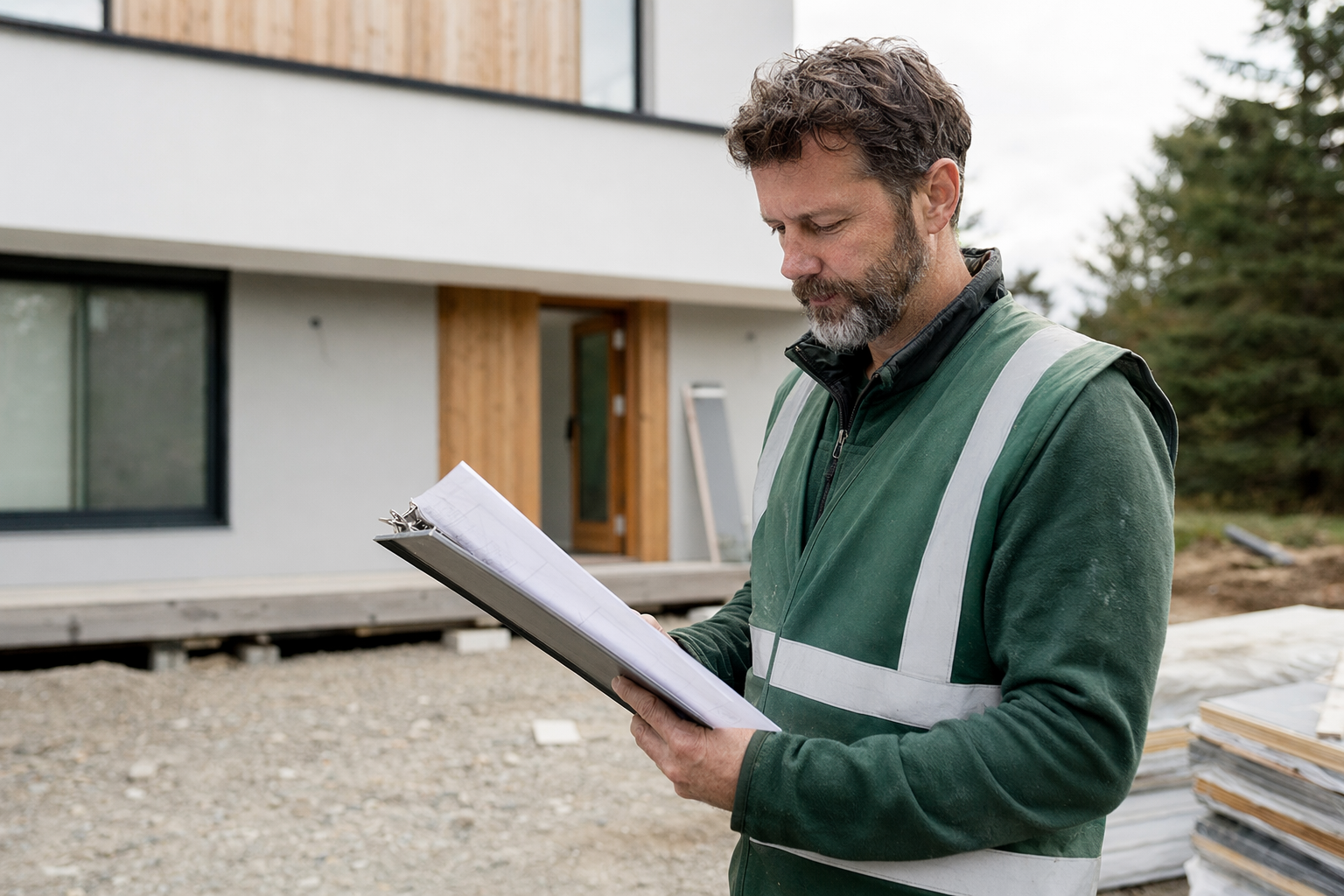
A heat pump moves heat instead of making heat by burning fuel. In winter, it pulls heat from outdoor air and moves it inside. In summer, it works like an air conditioner and moves heat out.
Many green homes use all-electric systems because they pair well with efficient envelopes and, if you want, rooftop solar later. Common options include ducted central heat pumps, ductless mini-splits, and heat-pump water heaters.
Important: the right system depends on your climate, floor plan, insulation levels, window performance, and air leakage. Ask the builder and HVAC designer to show the load calculations and equipment selection in writing.
Why correct sizing matters
Bigger is not always better. Oversized HVAC can short-cycle, which means it turns on and off too often. That can reduce comfort, reduce humidity control, and waste energy.
A good team should size the system from room-by-room and whole-house calculations, not by rule of thumb. In a green or passive-style build, this is especially important because the loads can be much lower than in a standard house.
Look for a process like this:
- Set insulation targets, window specs, and airtightness goals early.
- Estimate heating and cooling loads from the actual plans.
- Choose equipment that matches those loads.
- Design ducts or indoor units for the rooms that need them.
- Verify performance after installation.
You can learn more about planning choices at learn and compare local green-minded builders at get matched.
What efficient HVAC looks like in a green build
Efficient HVAC is more than the outdoor unit. It includes distribution, fresh air, controls, and testing. In a tighter home, ventilation also matters because fresh air should be planned, not left to random leaks.
A strong setup may include:
- A properly sized heat pump for heating and cooling.
- Short, well-sealed ducts inside conditioned space, or well-planned ductless heads.
- A separate HRV or ERV for balanced fresh air.
- Good filters and easy service access.
- Simple controls the homeowner can actually use.
Windows and shell details also affect HVAC results. Ask about window U-factor and SHGC, insulation R-value, and the home's airtightness target, often measured with a blower-door test in ACH. These are core parts of the comfort and efficiency story, not side details.
Questions to ask before you hire
You do not need to become an engineer, but a few clear questions can help you compare builders and HVAC partners.
- What insulation levels, window specs, and airtightness target are you designing for?
- Will you provide heating and cooling load calculations from my actual plans?
- Where will ducts run, and will they be inside conditioned space?
- Is fresh-air ventilation included, such as an HRV or ERV?
- What testing will you do, such as blower-door testing and airflow balancing?
- What exactly is included in the scope and price?
EverGrain Built is a free matching and guide service. We help you connect with experienced green custom-home builders so you can compare options. You choose who to hire, and you should confirm scope, equipment, testing, and price in writing with a licensed builder.
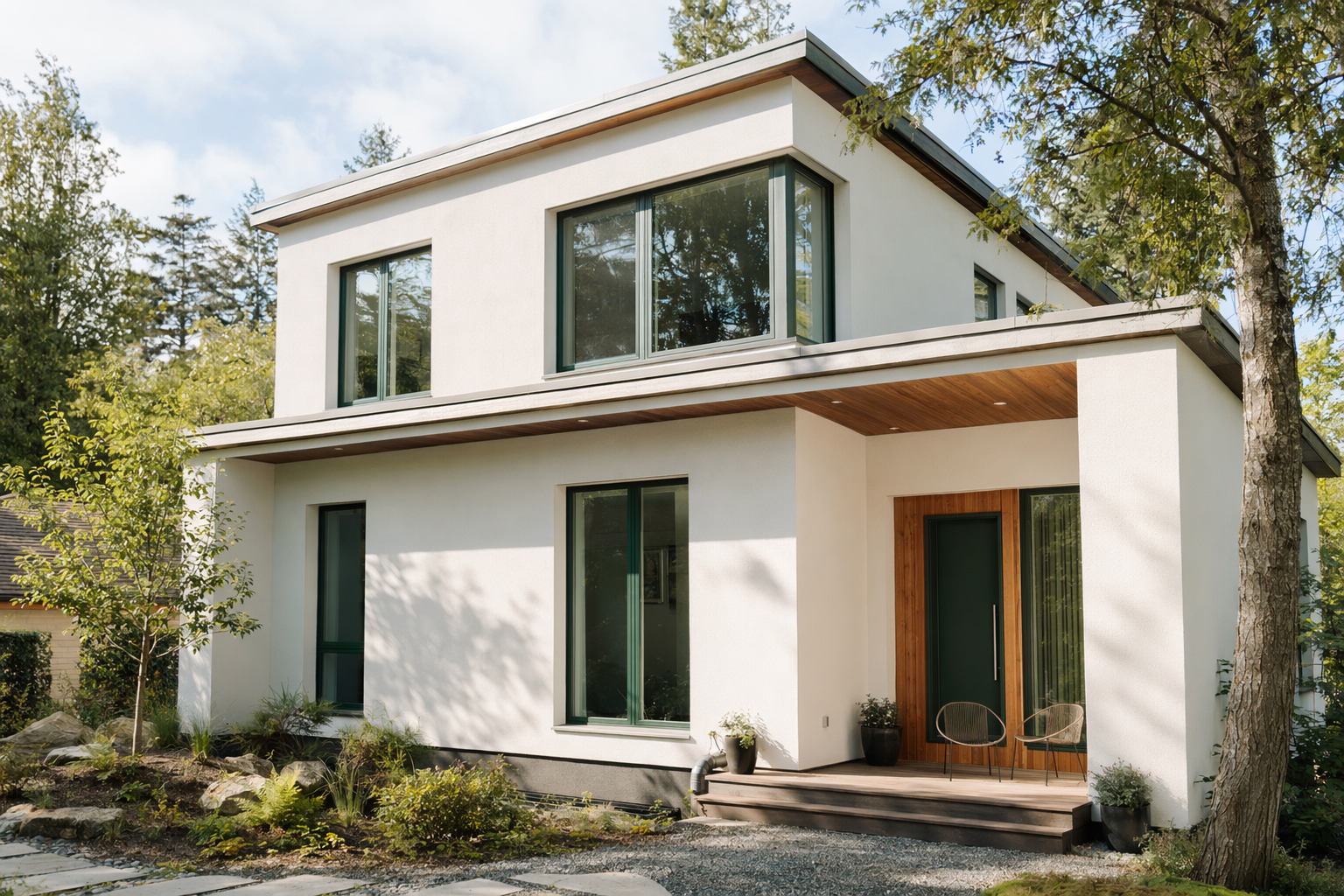
A good heat pump works best when the house is built to need less heating and cooling in the first place. Focus on the shell, size the system carefully, and get the full scope in writing before you hire.
Common questions
Can one heat pump really heat and cool a whole house?
Often, yes, but it depends on the home and the climate. A well-insulated, airtight home with good windows usually has lower heating and cooling loads, which makes an all-electric heat pump more practical. The builder and HVAC designer should size the system from the actual plans, not guess.
Do I still need a furnace as backup?
Some homes use only a heat pump. Others use supplemental heat, depending on climate, design goals, and the equipment selected. There is no one answer for every project. Ask for the design temperature, load calculations, and the planned backup strategy, if any, in writing.
What is the difference between a heat pump and an HRV or ERV?
A heat pump handles heating and cooling. An HRV or ERV handles planned fresh-air ventilation. In a tight green home, both can matter. The heat pump manages temperature. The HRV or ERV brings in outdoor air and exhausts stale indoor air in a controlled way.
Will a high-efficiency HVAC system save me money?
It can reduce energy use in many projects, but exact savings vary a lot. Climate, utility rates, home size, insulation, airtightness, windows, thermostat settings, and maintenance all affect results. It is best to compare designs carefully and ask each builder to explain assumptions.