Building systems
Solar-ready & net-zero homes
A solar-ready home is built so solar can be added later with less hassle. A net-zero or net-zero-ready home goes further by cutting energy use first, then using efficient electric systems so a future solar array can cover some or all of the home’s yearly energy use, depending on the home, climate, and system size.
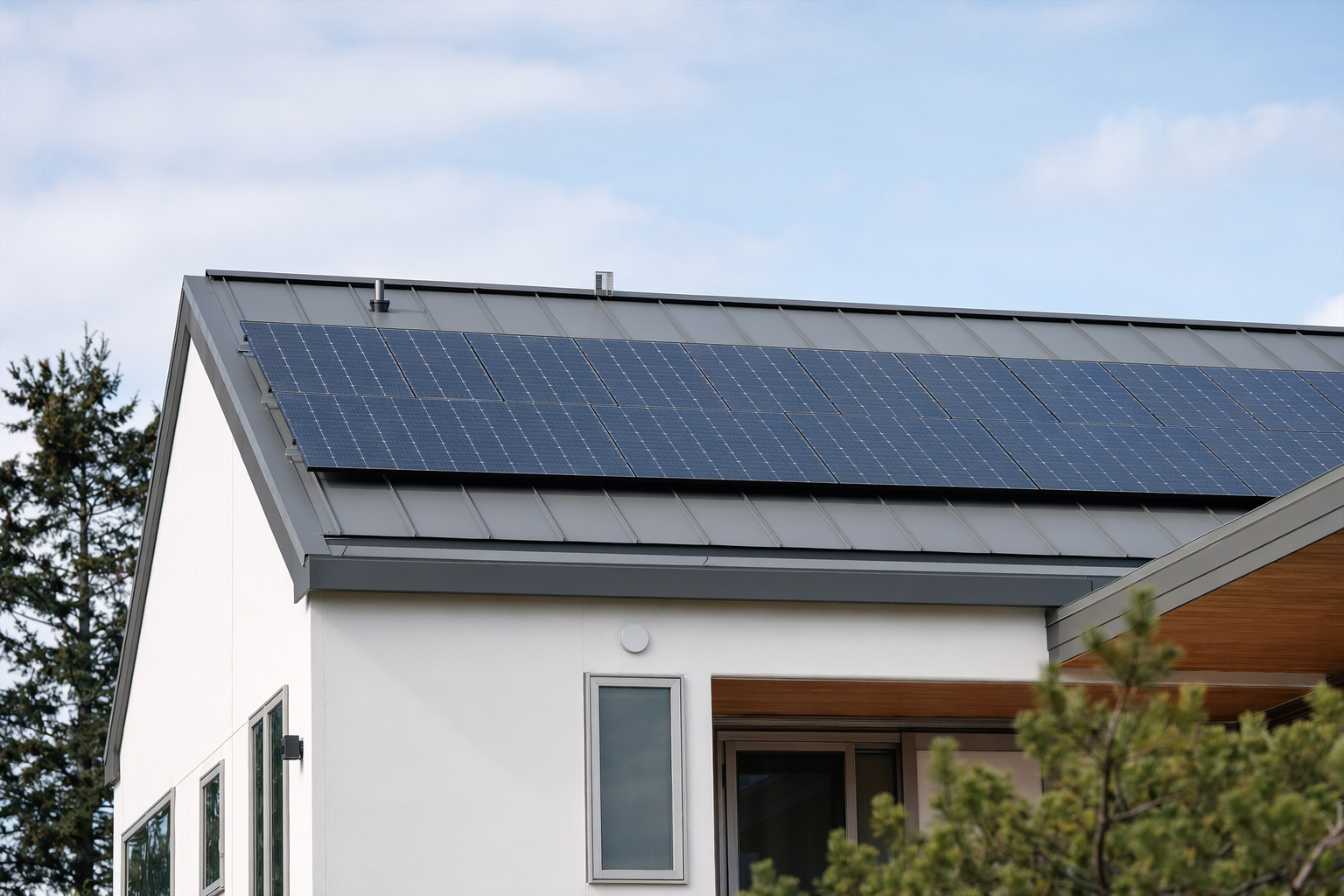
What solar-ready means
Solar-ready does not mean solar panels are installed today. It means the home is planned so adding panels later is simpler and more practical.
Common solar-ready steps include a roof area with good sun access, space in the electrical panel, conduit from the roof to the panel area, and wall or floor space for future equipment. In many homes, it also means choosing all-electric systems, so the home can use solar power more easily.
If you are early in planning, our free service can help you compare builders who understand green and passive goals. Start with /how-it-works/ or /get-matched/.
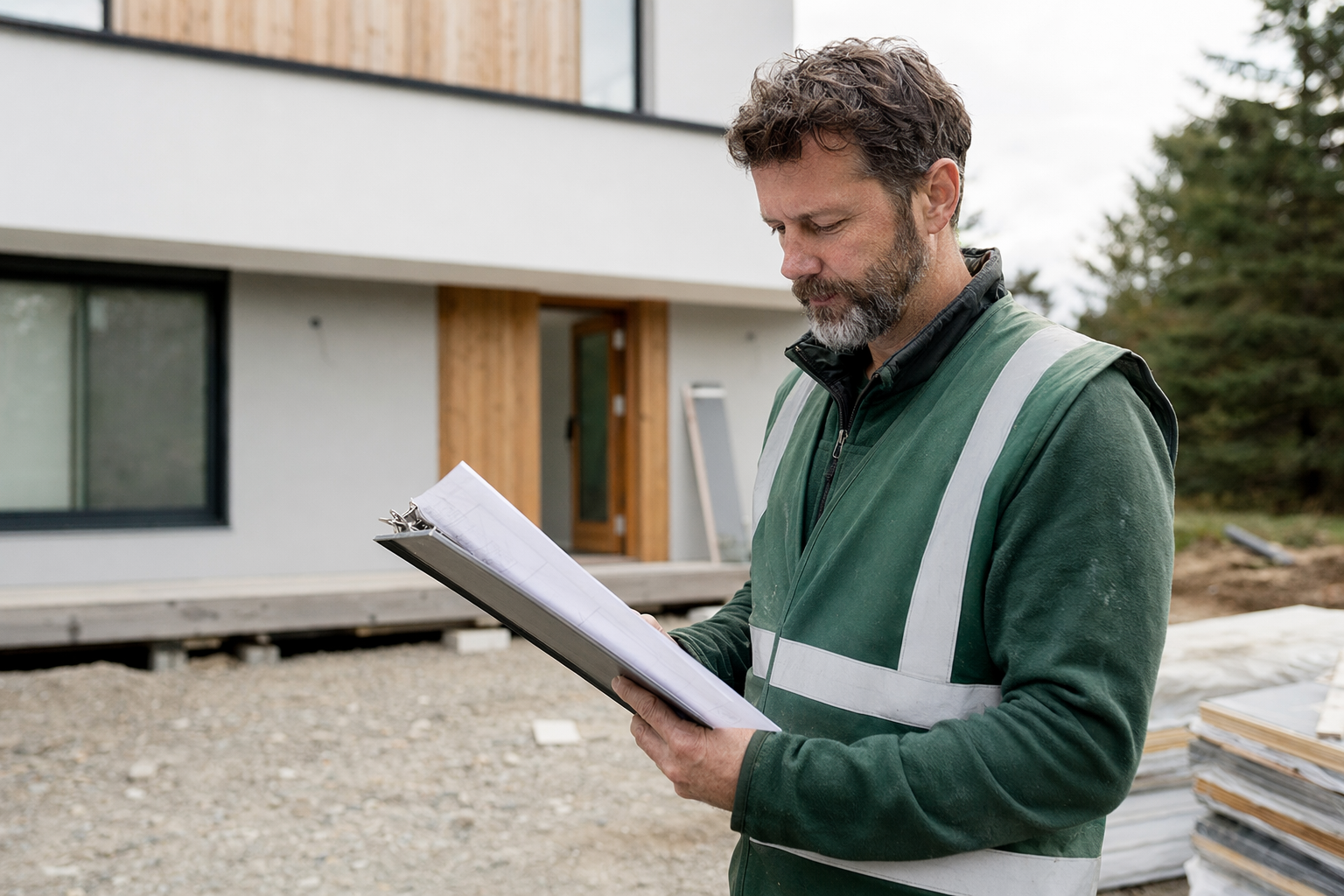
How net-zero and net-zero-ready homes work
A net-zero home is designed so the energy it uses over a year can be balanced by energy produced on site, usually with solar. A net-zero-ready home is built to use very little energy first, then set up so solar can be added later.
The order matters. First, reduce demand with a strong building shell and efficient equipment. Then size the future solar system around the lower energy use.
Important parts often include better insulation R-values, lower air leakage, high-performance windows with the right U-factor and SHGC, efficient heat pumps, heat-pump water heating, and balanced ventilation such as an HRV or ERV. A blower-door test helps verify airtightness, often measured in ACH.
Not every home will reach net-zero. Lot size, roof shape, shade, climate, utility rules, and budget all affect what is possible.
Simple choices that keep the option open
Many solar-ready decisions are small and easiest to make before construction starts. They do not guarantee future solar performance, but they can avoid costly changes later.
- Reserve a roof area with fewer vents, hips, and dormers.
- Plan the roof framing and layout to leave a clear solar zone.
- Run conduit from attic or roof area to the main electrical panel.
- Leave breaker space and confirm panel capacity with the electrician.
- Choose an all-electric path, such as a heat pump for space heating and cooling.
- Consider a heat-pump water heater and an induction range if that fits your goals.
- Leave wall or garage space for future inverter or battery equipment, if allowed and needed.
Ask the builder and electrician to put the exact scope in writing. Panel size, conduit size, equipment locations, and roof details should be listed clearly.
Build the shell first, then think about solar
Solar works best when the home needs less energy in the first place. That is why many green and passive builders focus first on the enclosure and mechanical systems.
- Improve insulation and reduce thermal bridging.
- Aim for low air leakage and verify it with a blower-door test.
- Use windows suited to the climate, with appropriate U-factor and SHGC.
- Install right-sized heat pumps and balanced ventilation.
- After that, estimate what solar may cover.
This approach can make a future solar system smaller than it would be on a standard home. Exact results vary, so ask each builder how they model energy use and how they confirm performance after construction.
You can learn more about related systems at /systems/ and general planning topics at /learn/.
How EverGrain Built helps
EverGrain Built is a free matching and guide service. We are not the builder, architect, or installer. We help you compare experienced green custom-home builders who can discuss solar-ready, all-electric, passive-house ideas, and net-zero-ready planning for your site.
You choose who to talk with and who to hire. Ask each licensed builder what is included, what is optional, and what needs to be confirmed by the electrician, designer, engineer, or local utility.
Before signing, get the scope and price in writing. That should include the wall and roof assembly, target airtightness, window specs, HVAC and ventilation equipment, electrical panel details, and any solar-ready rough-in work.
If you want help finding builders near you, use /get-matched/.
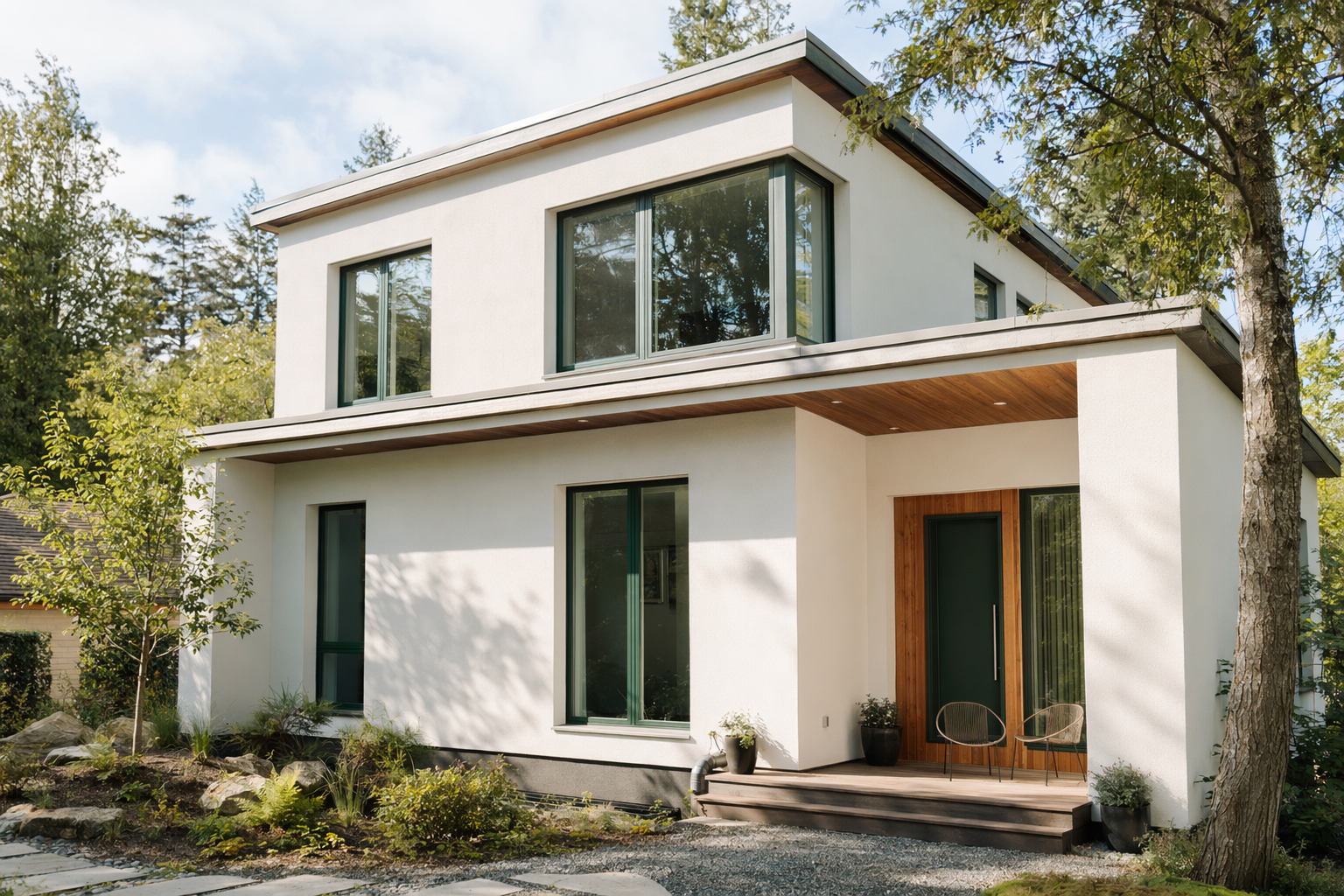
If you may want solar later, plan for it now. A good builder can make the home efficient first, then keep the door open for future solar with simple, written electrical and roof details.
Common questions
Do I need solar panels now to build a solar-ready home?
No. Solar-ready usually means the home is planned so panels can be added later more easily. The builder can prepare the roof area, wiring path, and electrical panel space now, while you decide later if and when to install solar.
Is an all-electric home required for net-zero?
Not always, but all-electric design is common because it works well with solar and avoids splitting energy use between gas and electricity. Many homeowners use heat pumps for heating and cooling, a heat-pump water heater, and other efficient electric appliances. What makes sense depends on your climate, site, utility options, and builder experience.
Will a net-zero-ready home have no utility bills?
Not necessarily. Energy use and energy production vary by climate, home size, occupant habits, equipment, shading, and solar system size. Ask the builder how they estimate energy use, and review those assumptions carefully.
What should I ask a builder about solar-ready planning?
Ask about roof layout, shading, reserved solar zone, conduit path, electrical panel capacity, breaker space, all-electric equipment choices, ventilation, blower-door testing, and written specs for windows and insulation. Also ask who will coordinate with the electrician and how any future solar work could affect warranties or roof details.