Learn
What is a thermal bridge, and why it matters
A thermal bridge is a spot in your home where heat moves through a material more easily than the area around it. These weak spots can make rooms feel less comfortable, raise heating and cooling demand, and increase the chance of condensation in some places.
A simple way to think about a thermal bridge
Your walls, roof, and floor are meant to slow heat flow. A thermal bridge happens when part of that assembly lets heat pass through faster than the insulated parts nearby.
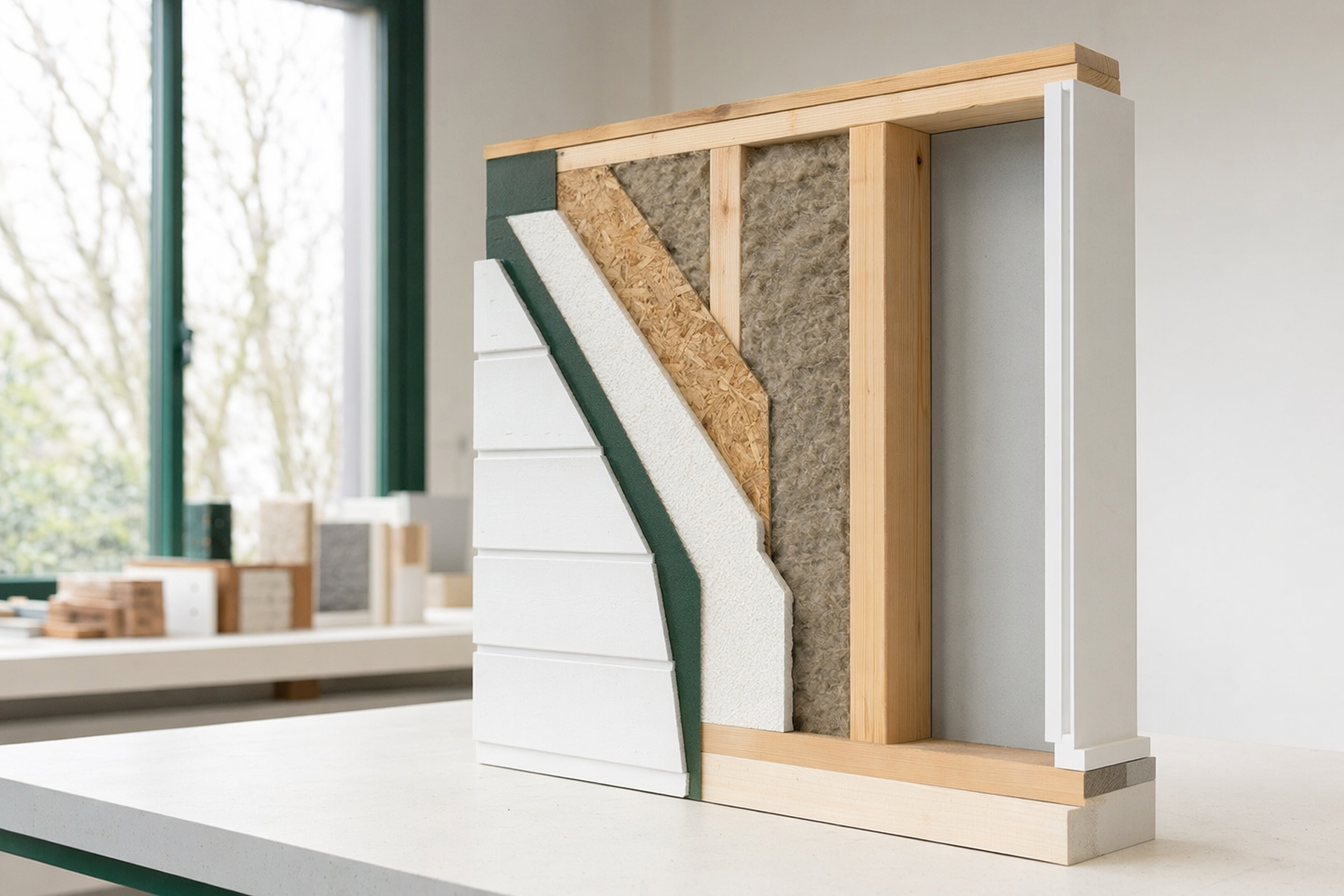
A common example is a wood or steel stud inside a wall. The insulation between studs may have a high R-value, but the studs themselves are less insulating. Heat can move through those framing members more easily, so the whole wall performs worse than the insulation label alone suggests.
This is why builders talk about the difference between center-of-cavity insulation and whole-assembly performance. Real homes are made of many parts, and those parts affect each other.
Where thermal bridges happen in a home
Thermal bridges can show up in many places, especially where one building part meets another or where structure passes through insulation.
- Wall studs, headers, rim joists, and top plates
- Steel beams, columns, and shelf angles
- Balcony slabs and porch connections
- Window and door frames
- Foundation edges and slab perimeters
- Roof-to-wall connections and attic hatches
The risk depends on the design, climate, and how the home is built. A skilled green builder can point out these areas and explain what details they use to reduce heat loss and condensation risk.
Why thermal bridges matter for comfort and durability
Thermal bridges can create colder or hotter interior surfaces. You may notice a room that feels drafty even when the windows are closed, or a wall area that feels cooler to the touch in winter.
If a surface gets cold enough, indoor moisture can condense on it. Over time, repeated condensation can contribute to staining, material damage, or mold in some conditions. That is one reason good detailing matters, not just energy use.
Thermal bridges are also tied to your home's overall efficiency. Even with good insulation, weak spots can reduce real-world performance. That matters in standard high-performance homes, and even more in homes aiming for very low energy use or net-zero.
How builders reduce thermal bridging
There is no single fix. Good builders usually reduce thermal bridging by improving the assembly as a whole.
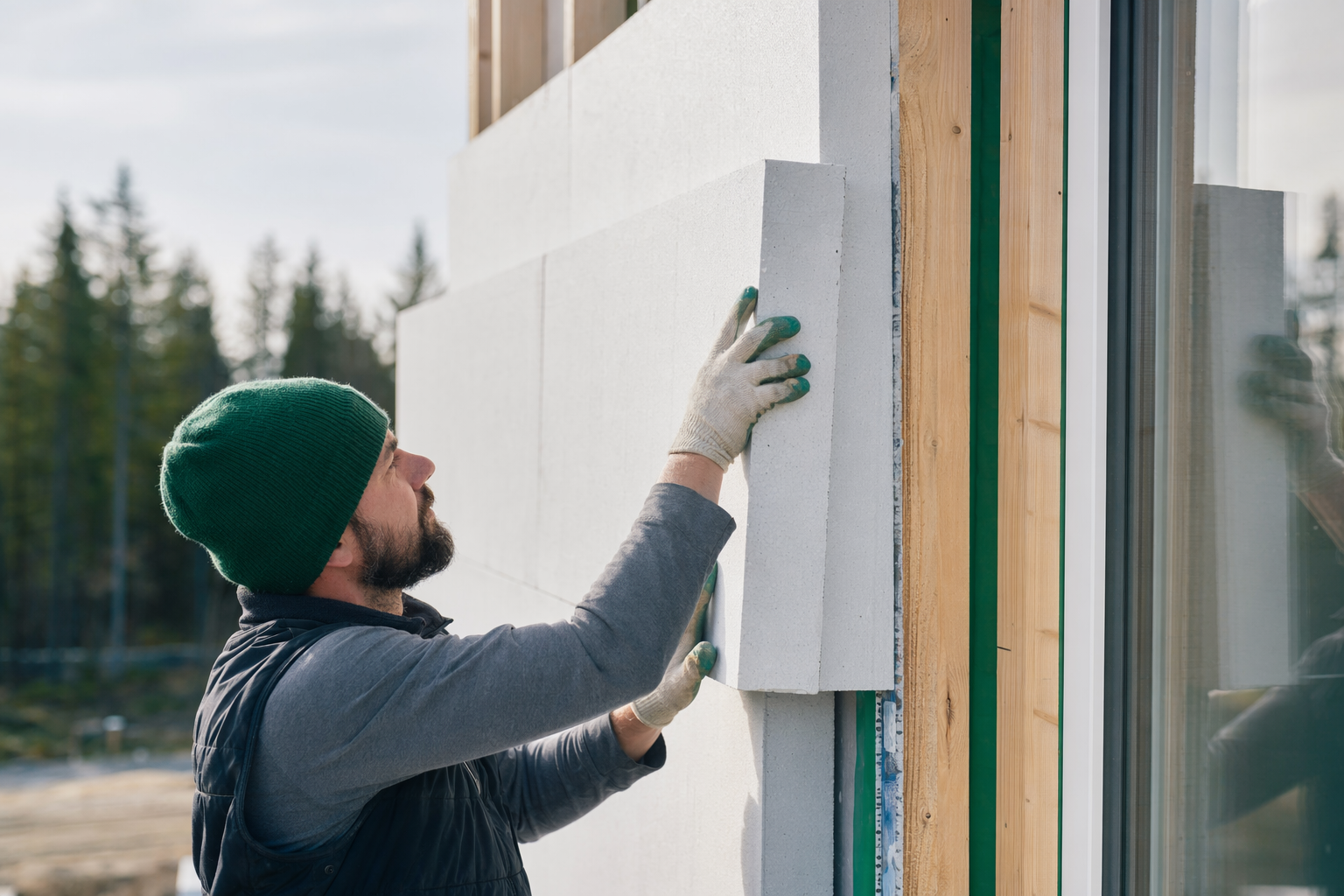
- Continuous exterior insulation. This adds a layer of insulation over framing, which helps cover the weak spots.
- Advanced framing. This can reduce unnecessary wood in walls while still meeting structural needs.
- Careful window installation. Good placement, flashing, and insulated detailing around openings can help.
- Thermal breaks. Special materials or details can separate conductive parts, such as some slab or steel connections.
Other related choices matter too, like airtightness, window U-factor and SHGC, and ventilation with an HRV or ERV. You can learn more on our systems and learn pages.
Ask the builder to explain the assembly in plain language. Ask where the insulation layer is continuous, where it stops, and how transitions are handled.
What to ask a green builder before you hire
You do not need to be an engineer to ask good questions. A good builder should be able to show you typical wall, roof, and foundation details and explain how they limit heat loss.
Helpful questions include:
- Where are the main thermal bridges in this design?
- Will you use continuous insulation, and where?
- How do you detail window openings, slab edges, and roof-to-wall connections?
- What whole-wall or whole-assembly performance are you targeting?
- Will you do blower-door testing, and when?
- Who is responsible for confirming the final scope and price in writing?
EverGrain Built is a free matching service. We help you compare experienced green custom-home builders near you, but you choose who to hire. You should confirm design details, scope, schedule, and price directly with a licensed builder. If you want help finding builders who understand high-performance details, get matched.

A thermal bridge is a weak spot where heat passes through your home more easily. Good design can reduce those weak spots and help your home perform closer to what the plans promise.
Common questions
Is a thermal bridge the same as an air leak?
No. They are related, but not the same. A thermal bridge is a path for heat flow through materials. An air leak is unwanted air movement through gaps or cracks. A home can have one, the other, or both. Good builders address both insulation details and airtightness.
Can wood framing be a thermal bridge, or only steel?
Yes. Steel is much more conductive, so it is often a bigger issue, but wood framing also bridges heat compared with the insulation around it. That is why whole-wall design matters, not just the insulation placed between studs.
Do thermal bridges always cause mold?
No. But they can make some surfaces colder, which can raise condensation risk under the right indoor humidity and weather conditions. The outcome depends on climate, assembly design, moisture control, ventilation, and how the home is used.
Should I avoid a builder if they do not use the term thermal bridge?
Not automatically. What matters is whether they understand the concept and can explain their wall, roof, window, and foundation details clearly. Ask for drawings or photos of past assemblies, and confirm the final scope in writing with the builder you hire.