Learn
Green building for families new to the US
If you are new to the US, green building terms can feel confusing. This guide explains the basics in plain language so you can ask better questions, compare builders, and choose what fits your family, home, and budget.
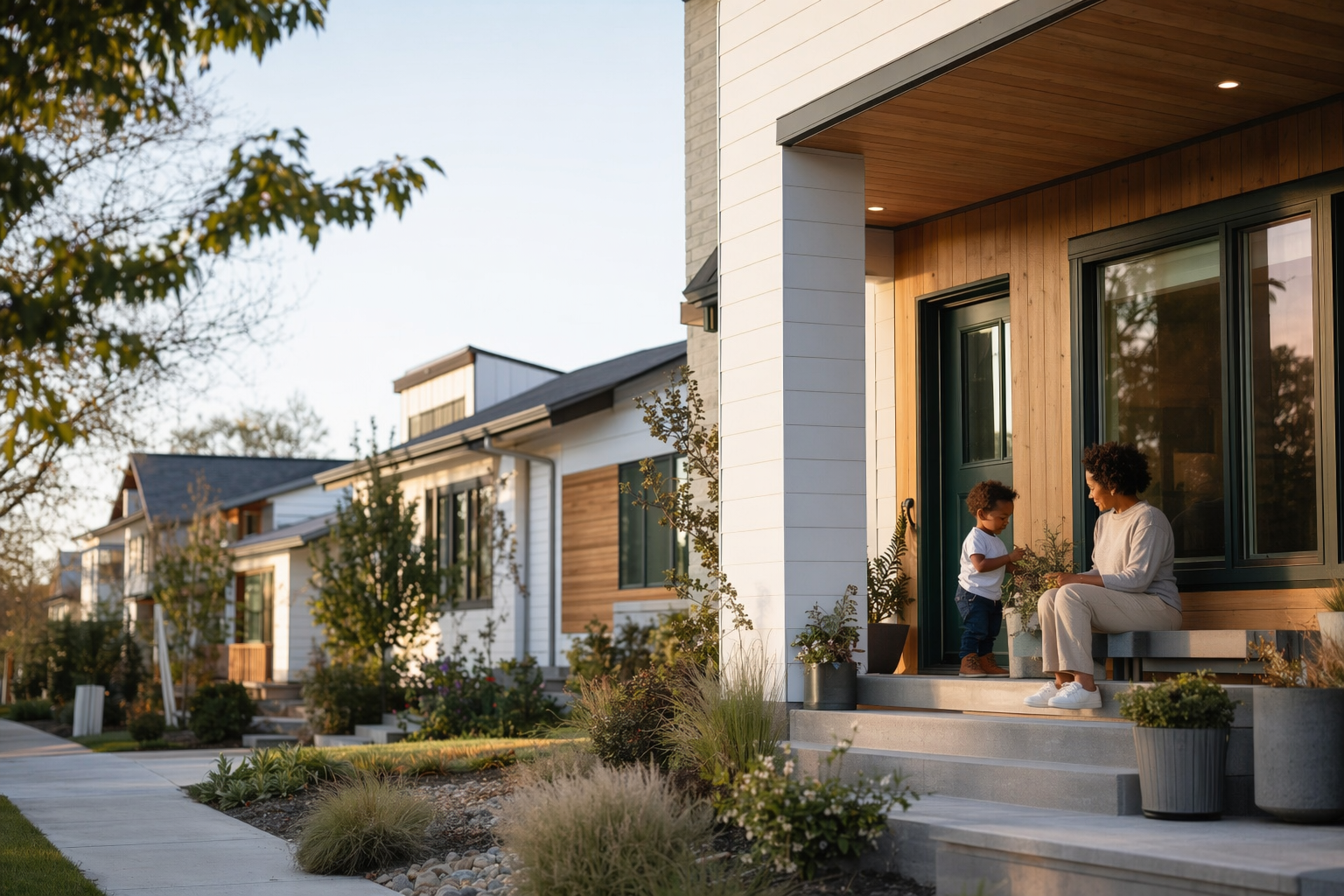
What green building means in simple words
Green building means designing and building a home that uses less energy, wastes less, and supports healthy indoor air. A green home often has better insulation, careful air sealing, good windows, efficient heating and cooling, and fresh-air ventilation.
You may also hear words like high-performance home, energy-efficient home, or passive house. These are related ideas, but they are not all the same. Some homes aim for lower energy use. Some aim for very low air leakage. Some follow a certification program, and some do not.
The most important point is this. A green home is not one single product. It is a set of choices about the building shell, mechanical systems, materials, and construction quality.
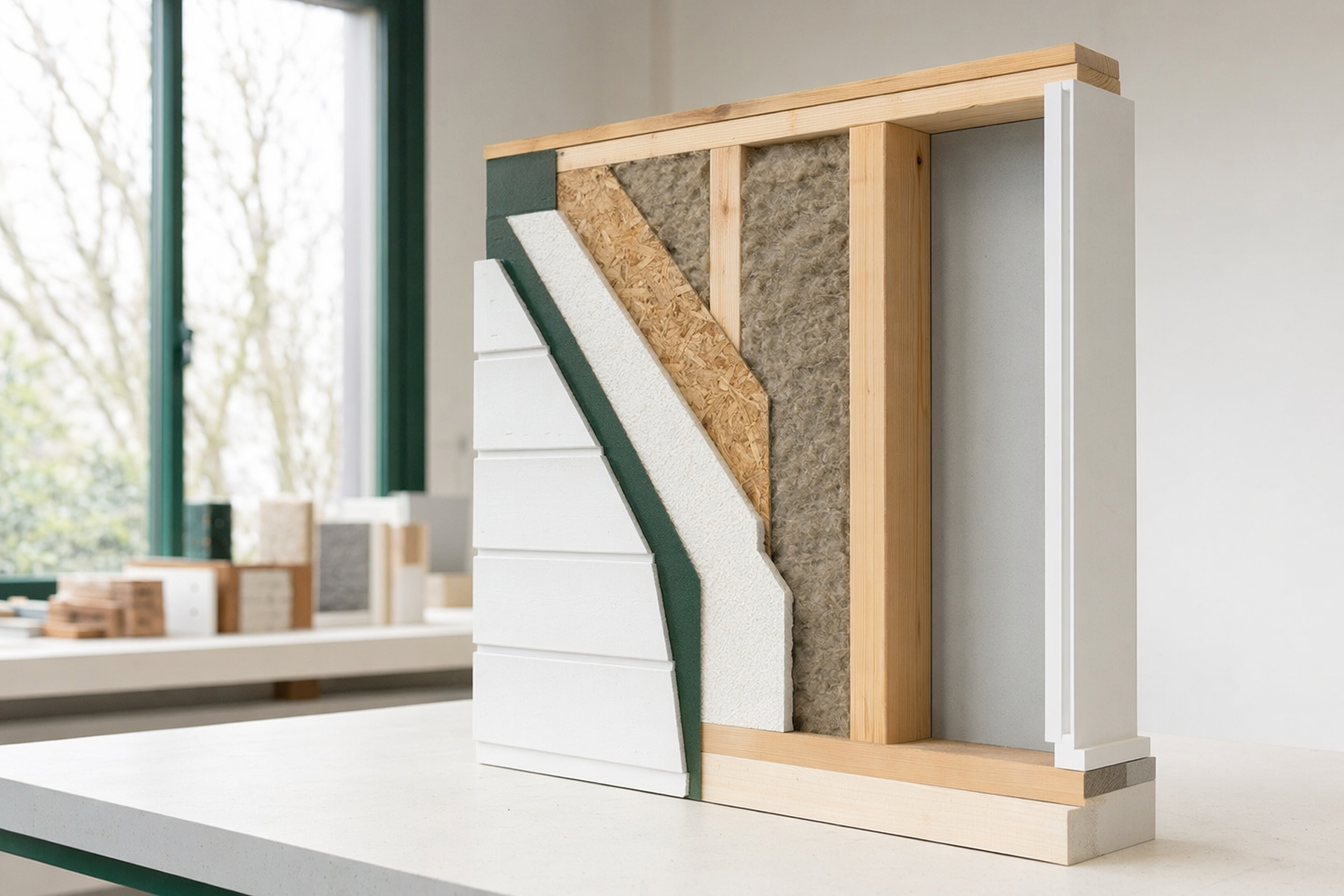
Words you may hear from builders
Many families tell us the hardest part is the language. Here are a few common terms:
- R-value means how well insulation resists heat flow. Higher R-value usually means more insulation.
- Airtightness means how much outside air leaks through cracks. Builders often measure it with a blower-door test and report ACH, or air changes per hour.
- U-factor and SHGC describe window performance. U-factor relates to heat loss. SHGC relates to how much solar heat comes through the glass.
- HRV or ERV are ventilation systems that bring in fresh air in a controlled way.
- Heat pump is an electric system that can heat and cool your home.
- Net-zero usually means a home is designed to use very little energy, then produce enough renewable energy over time to balance much of that use.
You do not need to become an expert before you speak with a builder. It helps to know the words, ask for plain explanations, and request all scope and price details in writing.
What can matter for comfort, health, and monthly bills
A well-built green home may feel more even from room to room. It may also help reduce drafts and support better indoor air quality. But results vary by climate, design, equipment, maintenance, and how the home is used.
Monthly utility bills can also vary a lot. Home size, weather, local energy prices, family habits, and system choices all make a difference. No honest builder or service should promise exact savings before the home is designed and priced.
If comfort and air quality matter most to your family, ask how the builder handles insulation, air sealing, windows, humidity, and ventilation. If long-term energy use matters most, ask how they approach the building shell first, then heating, cooling, and water heating. You can learn more on our systems and costs pages.
Questions to ask a green builder
Bring a written list to every meeting. This helps if English is your second language, and it makes it easier to compare builders fairly.
- What level of insulation do you recommend for my climate?
- Do you test airtightness with a blower-door test? What target ACH do you aim for?
- What window U-factor and SHGC do you suggest for this site?
- Will the home have an HRV or ERV for fresh air?
- Do you usually install heat pumps? Why or why not?
- Can you show me what is included in the base scope, and what costs extra?
- Will you put the scope, allowances, exclusions, and price in writing?
It is also okay to ask the builder to slow down, explain terms, or repeat things. A good builder should be able to explain their process in plain language.
How EverGrain Built can help
EverGrain Built is a free matching and guide service. We are not the builder, architect, or contractor. We help you understand green home options and get matched with experienced green custom-home builders near you.
You compare builders and choose who you want to hire. Before signing anything, confirm scope, timeline, allowances, and price in writing with a licensed builder. If you want help getting started, visit how it works or get matched.
If your family is new to the US, that is okay. Start with your goals in simple words. For example, lower drafts, better air quality, lower energy use, all-electric systems, or a home that is ready for solar later. Clear goals make builder conversations easier.
You do not need to know every building term to start. Learn a few basics, ask clear questions, and compare builders carefully before you choose.
Common questions
Do I need to ask for a passive house?
No. Passive house is one approach, but it is not the only path. Many families want a greener, more efficient home without following a full certification program. Ask the builder what level of insulation, airtightness, windows, and ventilation they recommend for your climate and budget.
Will a green home always cost more?
Not always in the same way. Some upgrades add upfront cost. Some choices may change operating costs over time. The final numbers depend on your design, site, local labor, materials, systems, and builder. Ask for a written proposal that clearly shows what is included and what is optional.
What if English is not my first language?
That is common, and you should still expect clear answers. Bring a written list of questions. Ask the builder to explain terms in simple language. Ask for drawings, scope, and pricing in writing so you can review them carefully with family or an advisor.
Can EverGrain Built tell me which builder to hire?
We can help you get matched with builders who work on green custom homes, but the choice is yours. EverGrain Built is a free matching service, not the company building your home. You should compare options and confirm license, scope, schedule, and price directly with the builder you hire.