Learn
Avoiding mold and moisture in a tight home
A tight home can be healthier and more energy efficient, but only if moisture is managed well. Mold is not caused by tight construction alone. It usually happens when water gets in, indoor humidity stays too high, or wet materials cannot dry.

Why moisture problems happen in a tight home
A tight home has fewer air leaks. That is good for comfort and energy use, but it also means the home needs a clear plan for fresh air and drying. If that plan is missing, moisture can build up indoors.
Common sources are simple. Showers, cooking, people breathing, wet basements, roof leaks, plumbing leaks, and humid outdoor air can all add water to the house. If that moisture meets a cold surface, it can turn into liquid water.
Tight does not mean moldy. A well-built tight home should also have good flashing, drainage, insulation, air sealing, and balanced ventilation. These parts work together.
The main moisture risks to watch
Most mold problems start with bulk water or long-term dampness. A small leak that stays hidden can do more damage than normal daily humidity.
- Rain and roof leaks. Water that gets past roofing, siding, windows, or flashing.
- Ground moisture. Wet crawl spaces, poor grading, missing drainage, or basement seepage.
- Indoor humidity. Long showers, cooking without a vent hood, drying clothes indoors, or oversized humidifiers.
- Condensation. Warm indoor air hitting cold windows, ducts, pipes, or poorly insulated walls.
- Mechanical problems. Bath fans that vent into the attic, unbalanced ventilation, or short-cycling equipment.
If you are planning a green or passive-style home, ask how the builder handles the whole assembly. That includes roof, walls, windows, foundation, and ventilation. You can also learn more about common house components at /systems/.
What good builders do to prevent mold
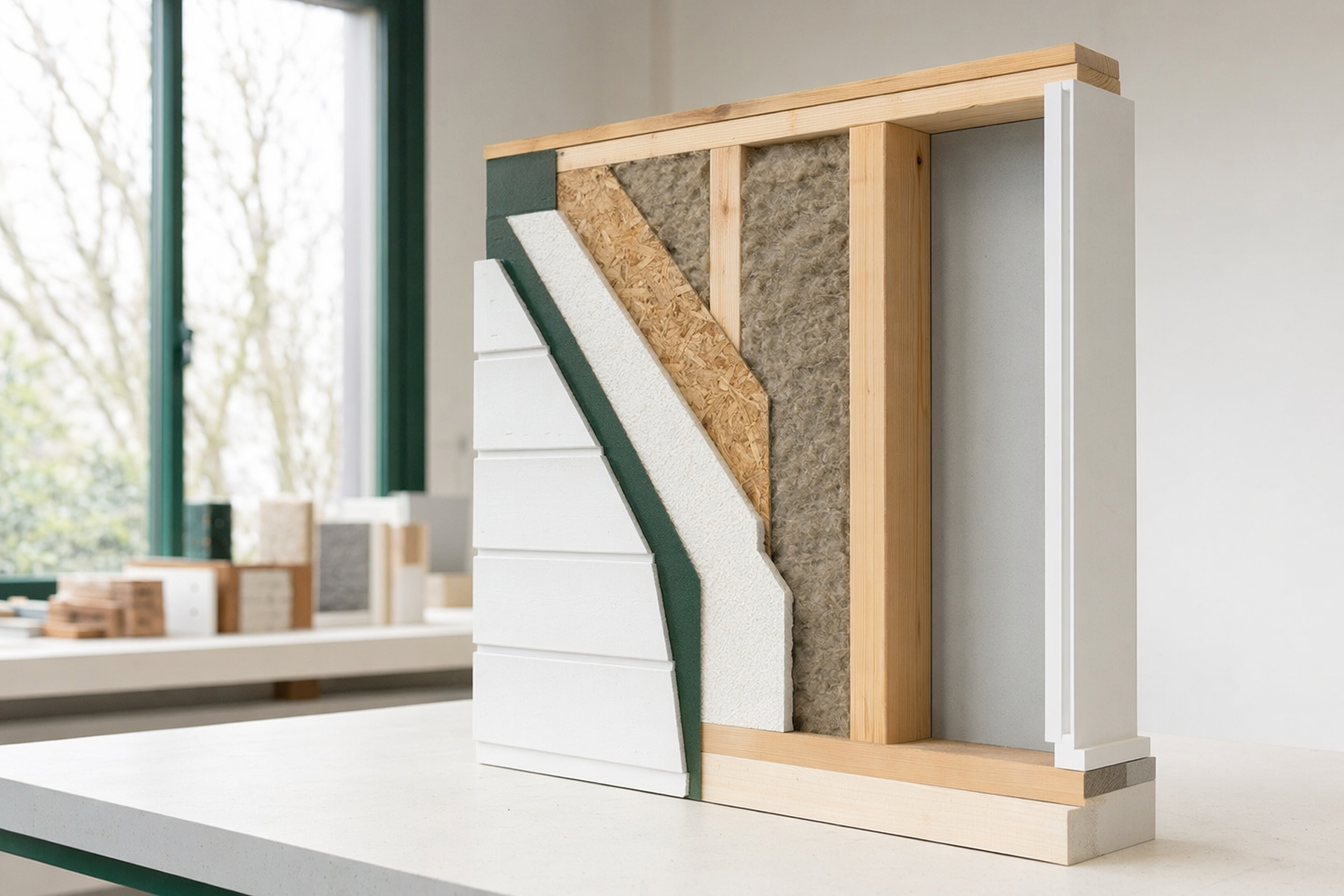
A good builder does not rely on one product to solve moisture. They use layers of protection and detail the house so water is directed out, air leakage is reduced, and materials can dry in the right direction for your climate.
- Keep rain out. Use proper roof overhangs, flashing, drainage planes, window installation details, and site grading.
- Control indoor humidity. Install quiet bath fans, a vented range hood, and balanced fresh-air ventilation such as an HRV or ERV, if appropriate.
- Reduce cold surfaces. Use better insulation, careful air sealing, and good windows with the right U-factor and SHGC for the climate.
- Test the home. Use a blower-door test to measure airtightness, often in ACH, and fix leaks before finish materials hide them.
For some homes, a heat pump, dehumidification, or different wall and roof assemblies may also make sense. The right details depend on your climate, site, and design. Confirm scope, materials, and testing in writing with the licensed builder you hire.
Questions to ask your builder
You do not need to know every building science term. You just need to ask clear questions and get clear answers. If a builder cannot explain the moisture plan in plain language, keep comparing.
Ask questions like these:
- How will you keep rainwater away from the roof, walls, windows, and foundation?
- What is your plan for air sealing, and will you do a blower-door test?
- What ventilation system will the home use, and how will bathrooms and the kitchen be vented?
- How will you handle basement, crawl space, or slab moisture?
- What insulation levels are planned, and where could condensation happen?
- Who is responsible for sealing ductwork, penetrations, and attic access points?
- Will you provide the scope and price in writing before work starts?
If you want help finding builders who understand green and energy-efficient homes, EverGrain Built is a free matching service. You compare local builders and choose who to hire. Start here: /get-matched/.
Daily habits that help after you move in
Even a well-built house needs normal care. Your daily habits affect indoor humidity and the chance of mold.
Run bath fans during and after showers. Use the kitchen hood when cooking. Fix leaks quickly. Keep gutters clean and water draining away from the house. Follow the builder's guidance for ventilation settings and filter changes.
If you see repeated window condensation, musty smells, peeling paint, or damp spots, do not ignore them. Ask a qualified pro to inspect the problem early. Quick action is usually easier than waiting.
If you are still comparing options, our guides at /learn/ and our overview at /how-it-works/ can help you prepare for builder conversations.

A tight home is not the problem. Uncontrolled water and humidity are. The goal is simple: keep water out, let the home dry the right way, and use good ventilation.
Common questions
Does a tighter home always have more mold?
No. Tight construction by itself does not cause mold. Mold usually needs moisture and time. A tight home with good flashing, drainage, insulation, air sealing, and ventilation can manage moisture very well.
Should I open windows instead of using mechanical ventilation?
Opening windows can help sometimes, but it is not a full moisture plan. Weather, outdoor humidity, smoke, pollen, noise, and security can limit when windows make sense. Many efficient homes use planned ventilation, such as bath fans and sometimes an HRV or ERV, to provide more consistent fresh air.
What should I ask about ventilation in a new green home?
Ask what type of ventilation the home will use, how bathrooms and the kitchen will be exhausted, where fresh air comes from, and how the system will be balanced and maintained. Also ask if the builder will test airtightness with a blower-door test and explain the result in ACH.
Can EverGrain Built tell me what moisture system my house needs?
We are not a builder, architect, or contractor. EverGrain Built is a free matching and guide service. We help you compare experienced green custom-home builders near you. The builder you hire should review your climate, site, design, scope, and price, and confirm all details in writing.