Learn
How much insulation does a green home need?
A green home needs enough insulation for its climate, design, and air sealing plan. More insulation is not always better by itself. The goal is a well-balanced home envelope that works with good windows, careful air sealing, and the right heating and cooling system.
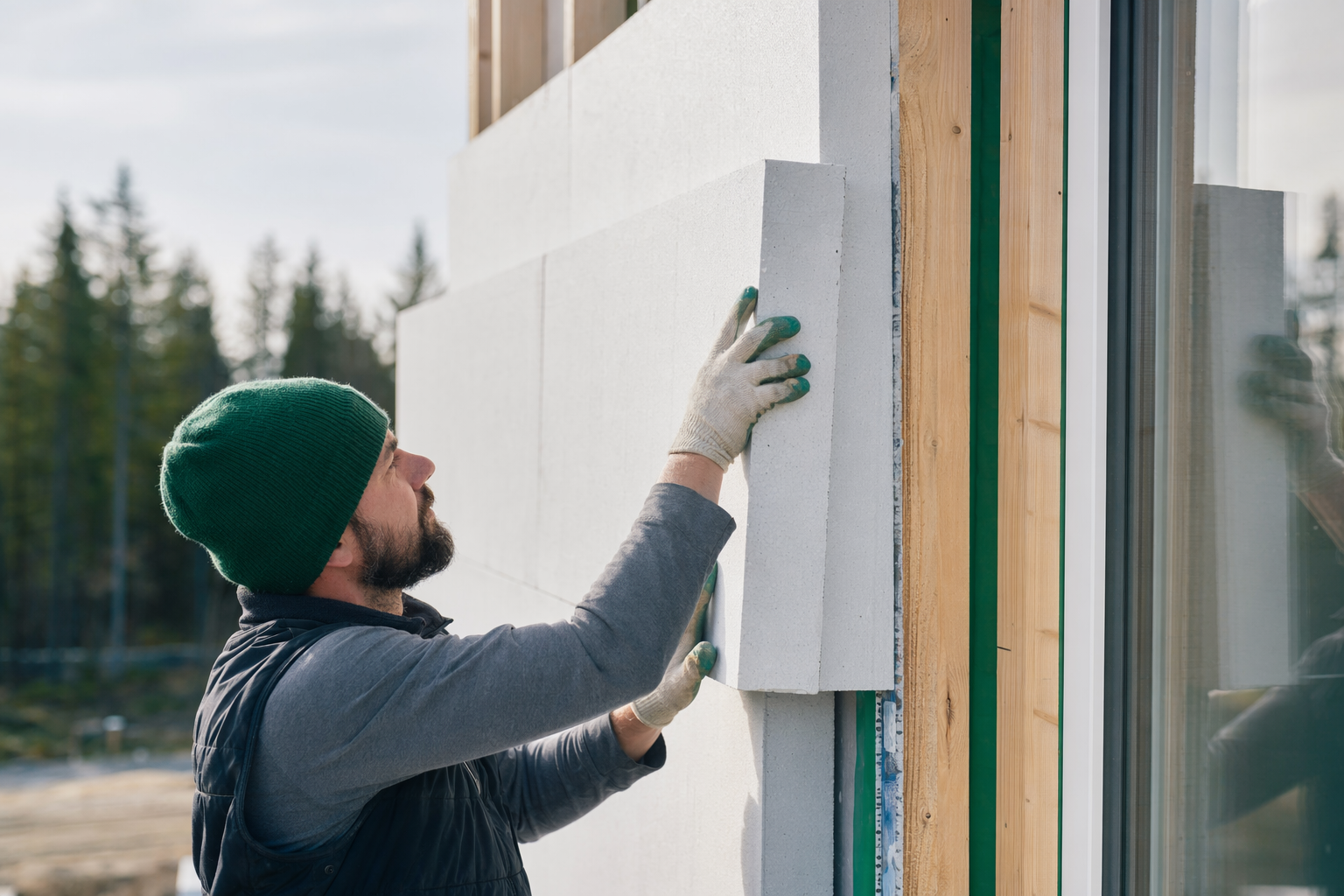
There is no one right insulation number
Insulation needs depend on where you live, how the home is shaped, and how the whole wall or roof assembly is built. A house in Minnesota usually needs a different insulation plan than a house in Georgia.
Builders often talk about R-value, which measures how much a material slows heat flow. Higher R-value means more resistance to heat moving through the wall, roof, or floor. But R-value alone does not tell the full story.
A green home also depends on air sealing, moisture control, window performance, and installation quality. Small gaps, bad detailing, or compressed insulation can reduce real-world performance.
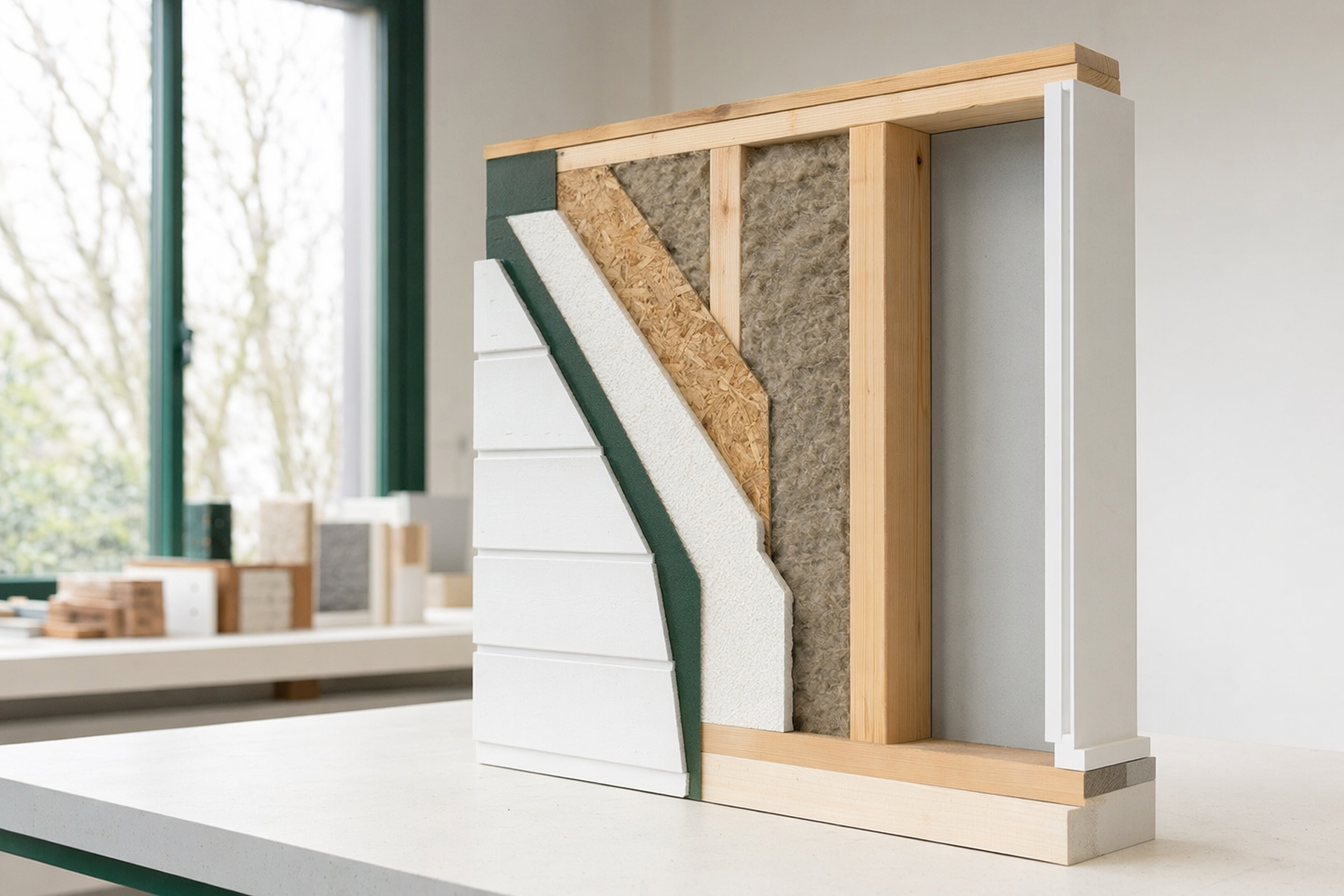
Start with climate zone, then look at the whole envelope
The best place to start is your climate zone and local energy code. That gives a basic range for wall, roof, and floor insulation. A high-performance builder may suggest going above code, but the right level should be explained for your site and goals.
Think about the whole building envelope, not just one part:
- Walls
- Roof or attic
- Floors over unconditioned space
- Foundation walls or slab edges
- Windows and doors
- Air sealing details
Good windows matter too. Ask about U-factor and SHGC. These numbers help show how windows handle heat loss and solar heat gain. In many homes, balanced upgrades across insulation, windows, and airtightness work better than putting all your budget into one area.
If you are early in planning, get matched to compare builders who understand green home design in your area.
Air sealing matters as much as insulation
Insulation slows heat flow. Air sealing stops unwanted air leaks. You need both. If a home has lots of leaks, adding more insulation may not fix comfort problems.
Ask builders how they measure airtightness. A common test is the blower-door test, often reported in ACH, or air changes per hour. Lower ACH usually means a tighter home, but the target depends on the project and design.
A tighter home also needs planned fresh air. That is why many green homes use an HRV or ERV for ventilation. These systems bring in fresh air in a controlled way instead of relying on random leaks.
You can learn more about envelope and equipment choices on our systems and learn pages.
The best insulation plan depends on the assembly
There are different ways to build a high-performance wall or roof. Some homes use deeper framing with cavity insulation. Others add continuous exterior insulation to reduce thermal bridging. Roofs may use vented attics, unvented roof assemblies, or insulated roof decks.
Ask the builder to explain the assembly in plain language. You want to know where the insulation goes, how moisture is managed, and how they limit thermal bridges through studs, rim joists, and other structural parts.
Useful questions to ask are:
- What R-values are you proposing for walls, roof, and foundation?
- What airtightness target are you aiming for, and will you test it?
- Are you using continuous exterior insulation?
- How will you handle windows, slab edges, and other weak points?
- How does this insulation plan work with the HVAC design, such as a heat pump?
If your goal is very low energy use or net-zero ready performance, the insulation plan may be more aggressive. If you want a certified passive house level, the targets are usually stricter still. Always ask the licensed builder to confirm scope, materials, and price in writing.
How to compare green builders fairly
Two builders may both say they build energy-efficient homes, but their insulation plans can be very different. Ask each one for the same type of information so you can compare clearly.
Request a simple written summary of the proposed wall, roof, and foundation insulation, the window specs, the air sealing target, and the ventilation system. Also ask whether testing is included, such as a blower-door test.
Do not assume the highest R-value quote is the best quote. Better detailing, better installation, and a better balanced design can matter just as much. The right builder should be able to explain the tradeoffs in plain language.
EverGrain Built is a free matching service. We help you find and compare experienced green custom-home builders. You choose who to speak with and who to hire. See how it works or get matched to start.

A green home needs the right amount of insulation for its climate and design, not just the most insulation possible. Ask for a whole-house plan that covers insulation, air sealing, windows, and ventilation together.
Common questions
What R-value should my walls have in a green home?
There is no single right wall R-value for every home. A reasonable target depends on your climate zone, wall design, window area, and air sealing plan. Ask the builder for the proposed wall assembly, the total R-value, and why it fits your location and goals.
Is more insulation always worth it?
Not always. After a point, extra insulation may help less than better air sealing, better windows, or better installation quality. A good builder should explain where added insulation makes sense and where your budget may do more in another part of the home.
Do I need spray foam to build a green home?
No. Some green homes use spray foam, and some do not. There are several ways to build a well-insulated home, including batt, blown-in, rigid board, mineral wool, cellulose, and mixed assemblies. What matters is how the full assembly performs, how it manages moisture, and how well it is installed.
Should I ask for a blower-door test?
Yes, it is a smart question. A blower-door test helps show how airtight the home is. Ask whether testing is included, when it will happen, and what ACH target the builder is aiming for. Confirm all testing and scope details in writing with the licensed builder.