Learn
Passive-Home Cost & Savings Worksheet
This free worksheet helps you compare the extra up-front cost of a passive or greener home with possible long-run operating and maintenance savings. It is a planning tool, not a quote, prediction, or guarantee, and it can help you ask better questions when you talk with builders.
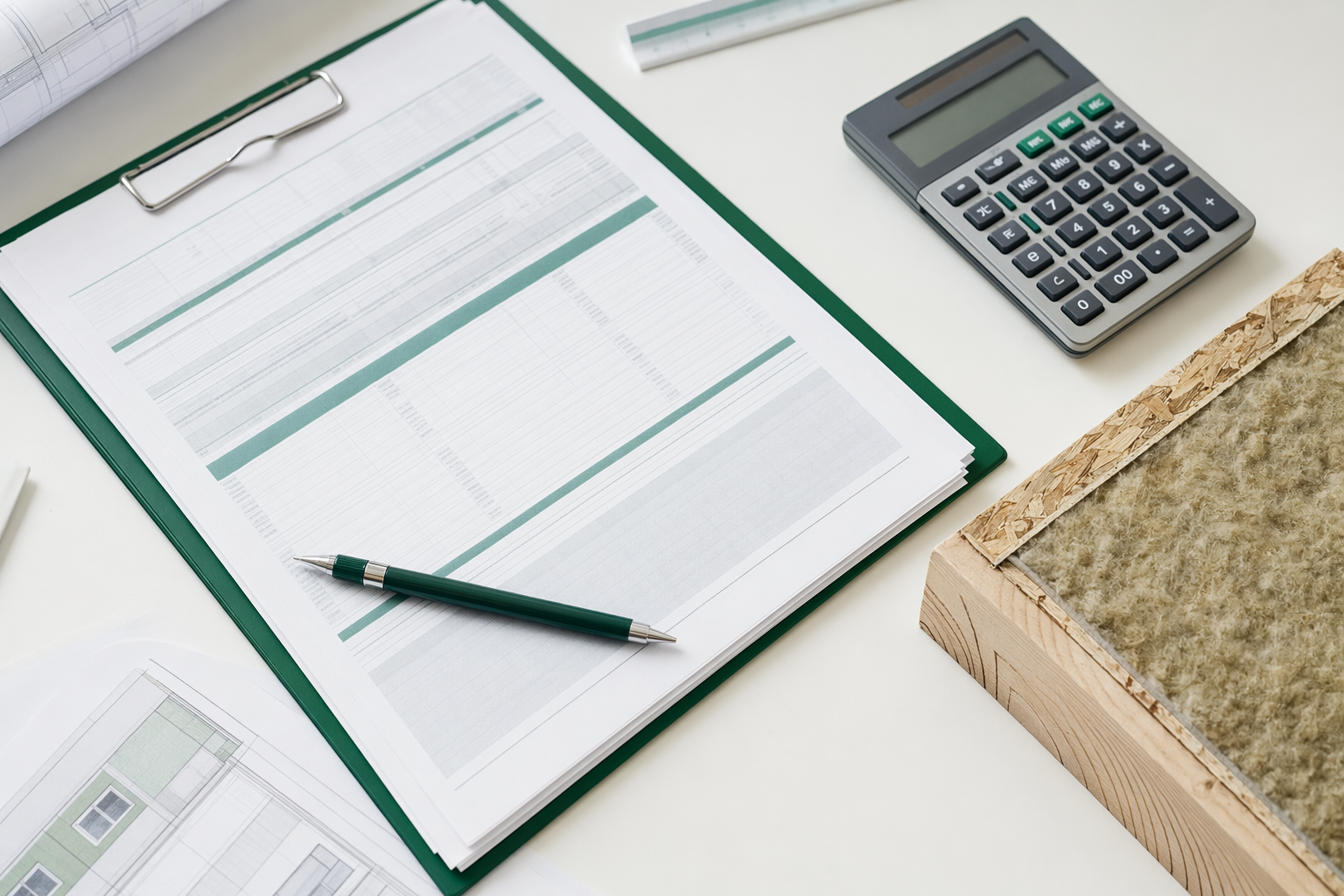
What this worksheet helps you do
The worksheet gives you a simple way to organize costs, assumptions, and trade-offs before you build. It is made for homeowners who want a clearer picture of what a higher-performance home might involve.
You can use it to compare a standard custom home plan with a greener or more passive approach. That may include better insulation, lower window U-factor, improved airtightness measured by ACH, an HRV or ERV, heat pumps, and solar readiness.
It also helps you write down what is still unknown. That matters, because final cost and savings depend on your climate, site, design, labor market, utility rates, and the licensed builder you hire.

What is inside the free download
The worksheet includes space to list your main upgrade choices and note where costs may change. It is not a bid sheet. It is a planning guide you can bring into early builder conversations.
- A side-by-side section for base home vs. green or passive upgrades
- Lines for enclosure items like insulation, air sealing, windows, and doors
- Space for mechanical items like heat pumps, water heating, HRV or ERV, and duct design
- A section for solar-ready, all-electric, and net-zero planning notes
- A place to track assumptions about energy use, maintenance, and replacement timing
- Questions to ask about blower-door testing, target airtightness ACH, and written scope
If you are still learning the basics, see systems and learn for simple explanations of common green building parts.
How to use it with builders
Start by filling out the worksheet with your goals. Keep it simple. Mark which items are must-haves, which are nice-to-haves, and which you are still researching.
Then share it with builders you interview. Ask each builder to confirm in writing what is included, what testing is planned, and what items are allowances or exclusions. This makes it easier to compare proposals fairly.
Use the worksheet to ask clear questions, such as:
- What wall, roof, and slab insulation levels are included?
- What window performance is planned, including U-factor and SHGC?
- Is airtightness being targeted, and will a blower-door test be done?
- What ventilation system is included, HRV or ERV, and who designs it?
If you want help finding experienced companies to compare, get matched. EverGrain Built is a free matching service. You compare options and choose who to hire.
Why this matters for planning
A passive or greener home can shift money from future energy use into better design, better windows, more insulation, tighter air sealing, and better equipment. But the balance is different for every project.
This worksheet helps you slow down and make those trade-offs visible. It can also help family members talk through priorities like comfort, indoor air quality, durability, all-electric design, and budget.
It does not replace builder pricing, energy modeling, engineering, or local code review. Use it as a starting point, then confirm scope, price, schedule, and responsibilities in writing with a licensed builder. You can also read more about planning on costs and how it works.

Use this worksheet to think through extra up-front cost versus possible long-run value before you build. It helps you ask better questions, but your final scope and price should always be confirmed in writing with a licensed builder.
Common questions
Does this worksheet tell me exactly how much a passive home will cost?
No. It is not a quote. It helps you organize likely cost areas and questions. Actual pricing depends on your design, climate, site work, materials, local labor, and the builder's scope.
Will it show my exact savings or payback?
No. It is a planning worksheet, not a guarantee. Energy use, maintenance, and replacement timing can vary a lot by home, weather, utility rates, and how the home is built and operated.
Is this only for certified Passive House projects?
No. You can use it for a certified project, a passive-inspired home, or a generally green and efficient custom home. The worksheet is meant to help you compare levels of performance and cost.
Can EverGrain Built help me find builders who understand this?
Yes. EverGrain Built is a free matching and guide service. We are not the builder. We help you connect with experienced green custom-home builders near you, and you compare and choose who to hire.