Project stories
A family's first passive build in a cold state
This anonymized story shows how one family planned their first passive-style home in a cold U.S. climate. It covers their goals, the systems they chose, and what they learned while comparing green builders. Outcomes vary by home, site, climate, budget, and builder, so this is one example, not a guarantee.
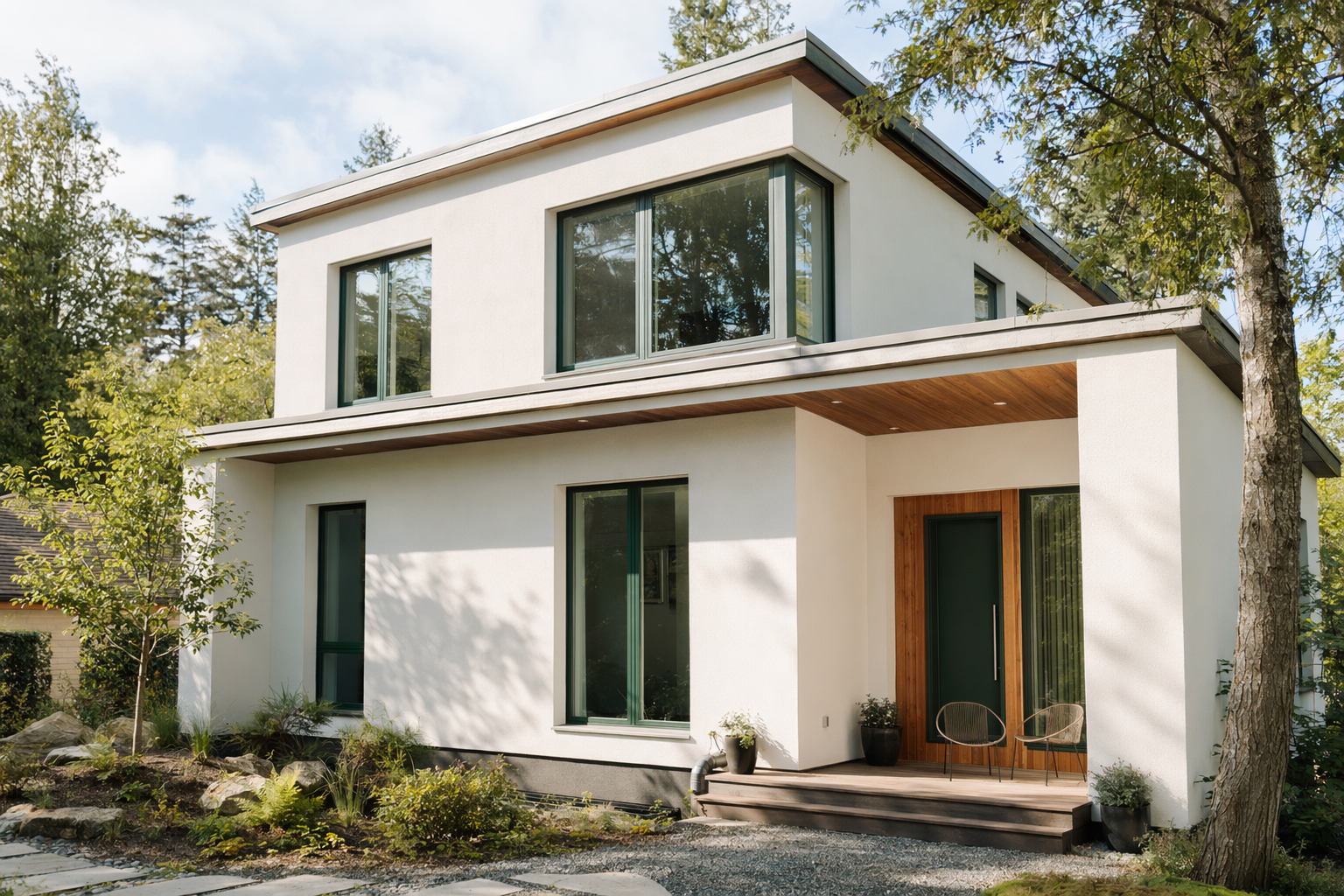
Why this family chose a passive-style home
The family wanted a new home that felt steady in winter, used less energy, and was built with careful detailing. They had never built a custom home before, so they needed simple explanations and a builder who could follow a clear plan.
They were not chasing a label alone. Their main goals were lower heating demand, better comfort near windows, good indoor air quality, and fewer drafts. They also wanted to understand the tradeoffs before signing a contract.
Like many homeowners, they started by learning the basics of insulation, airtightness, windows, and ventilation. Resources like learn and systems helped them ask better questions in builder interviews.
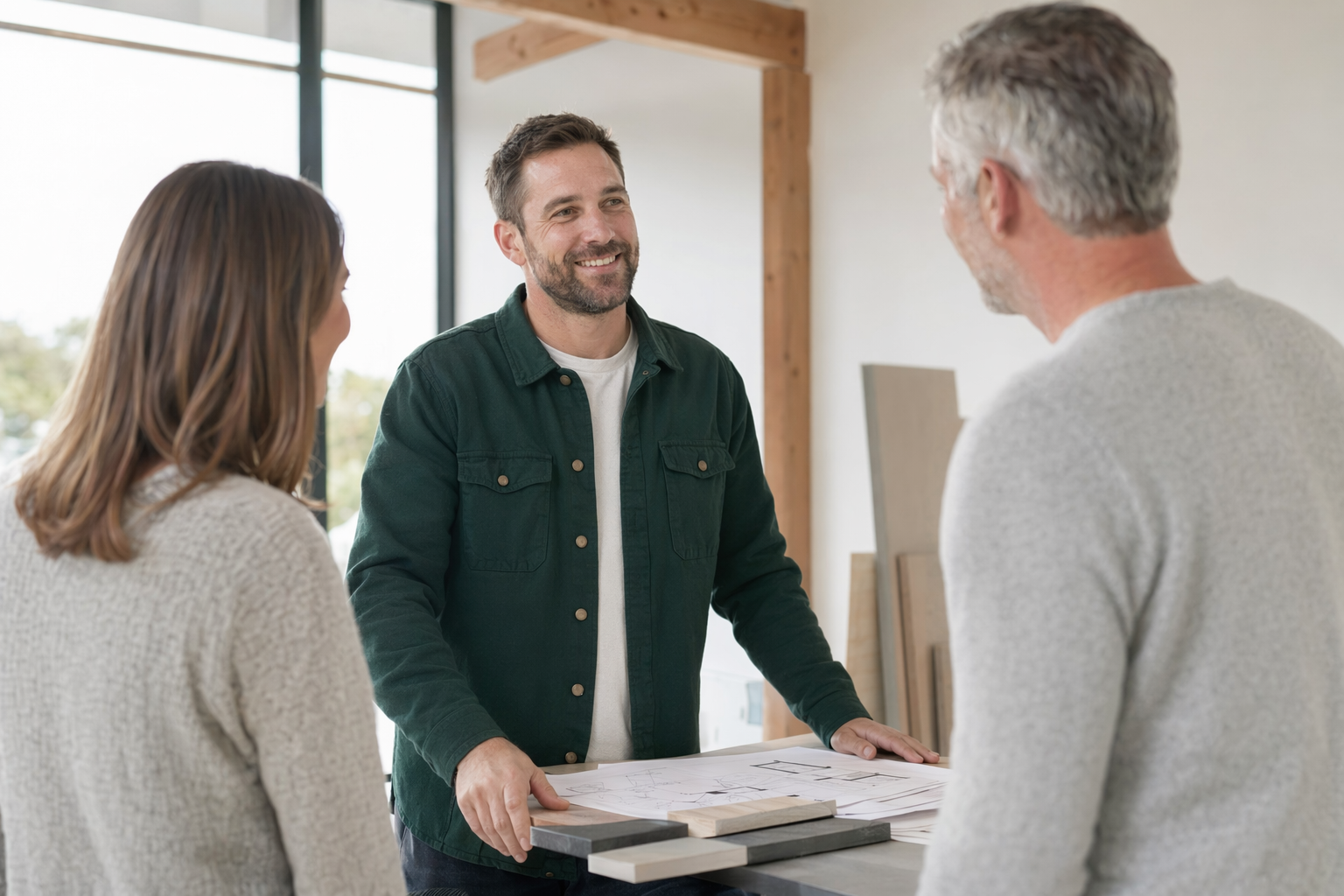
The cold-climate design choices
In a cold state, the enclosure mattered most. The design team and builder focused on a simple shape, strong insulation, careful air sealing, and windows selected for the local climate.
The main choices included:
- Higher insulation levels in the roof, walls, and slab or floor, with planned control layers.
- A tight air barrier, with blower-door testing during construction to check progress.
- High-performance windows and doors, looking at U-factor and SHGC based on orientation and climate.
- Balanced fresh-air ventilation with an HRV or ERV.
- An all-electric heat pump system sized for the home.
They also paid attention to window placement, shading, and how each part of the wall and roof connected. Small gaps at those connections can affect real-world performance, so details on paper had to match the work in the field.
How they compared builders
The family learned quickly that not every custom builder works the same way. Some were interested in green building, but had limited experience with airtight construction or mechanical ventilation. Others understood the details, testing, and sequencing needed for a passive-style build.
They made a short list of questions and asked each builder to explain their process in plain language. They wanted to know who would install the air barrier, when blower-door tests would happen, and how problems would be fixed if test results missed the target.
Their checklist looked like this:
1. Have you built homes with verified airtightness goals before?
2. How do you coordinate insulation, windows, and HVAC sizing?
3. Do you use blower-door testing during construction, not just at the end?
4. Who is responsible for ventilation design and commissioning?
5. Will scope, allowances, and change-order rules be written clearly?
That comparison process gave them more confidence. If you are starting from scratch, get matched to compare builders who say they work on green, energy-efficient, or passive-minded homes near you.
What they learned during construction
One of the biggest lessons was that good plans are only the start. The family saw how much the final result depended on field supervision, trade coordination, and catching problems early.
For example, the builder reviewed penetrations for plumbing, electrical, and vents before crews closed up the walls. That helped protect the air barrier. Mid-build testing also showed where extra sealing was needed, while access was still easy.
They also learned to confirm decisions in writing. That included window specs, insulation levels, ventilation equipment, and who would balance and commission the system. On a high-performance home, small substitutions can matter, so written scope was important.
Budget discussions stayed active the whole time. Some upgrades were kept. Others were simplified. The family focused on measures that supported the enclosure and mechanical plan first, then weighed optional features later. You can read more about tradeoffs on costs.
The outcome, and what other homeowners can take from it
By move-in, the family felt they better understood how a passive-style home comes together. They valued the quiet, the fresh-air system, and the careful winter-focused design. But they also understood that every project is different, and no one story can predict another home's cost, comfort, energy use, or certification result.
Their clearest takeaway was this: choose a builder who can explain the building science, show a repeatable process, and put scope in writing. A green home is not just a product list. It is the result of design, installation quality, testing, and follow-through.
If you want help finding companies to compare, EverGrain Built is a free matching service. We are not a builder, architect, or contractor. We help homeowners learn the basics and get connected with builders to interview. You compare options and choose who to hire. See how it works or get matched.
This story shows that a good passive-style home in a cold climate starts with a strong shell, careful testing, and a builder who explains the work clearly. Use it as a learning example, not a promise of what your project will do.
Common questions
Does a passive-style home always cost more?
Not always in the same way, and there is no single rule. Cost depends on size, design, site, climate, local labor, materials, and the builder's experience. Some budgets go up because of better windows, insulation, air sealing, and ventilation. At the same time, other parts of the design may be simplified. Ask each licensed builder to show scope and pricing in writing.
What matters most in a cold-climate passive build?
Usually the biggest priorities are a strong enclosure and careful execution. That means insulation, thermal-bridge control, airtightness, climate-appropriate windows, and a ventilation system such as an HRV or ERV. In cold areas, details at corners, roof-to-wall connections, and around openings matter a lot.
Do I need formal passive certification?
Not necessarily. Some homeowners want formal certification. Others want passive principles without pursuing a label. Both paths can lead to a better home if the design, installation, and testing are done well. If certification matters to you, confirm in writing who is responsible for documentation, modeling, testing, and fees.
What does EverGrain Built do?
EverGrain Built is a free matching and guide service. We are not a builder, architect, or contractor. We help homeowners learn what to ask and connect with green custom-home builders to compare. You choose who to contact and who to hire, and you should confirm scope, schedule, licensing, and price in writing with the builder.